A deep-dive study companion for the six-week course and artist salons at The People's Forum, April 21 – May 26, 2026. Built for people in the class, people who found it late, and people who will find it after the course has run its course.
Course Tuesdays 6:30 PM ET
Instructors Claudia De La Cruz · Manolo De Los Santos
License CC-BY 4.0
Companion by Radical Imagination
How to use this
The original course materials are hosted here as a list of resources. This companion is a layer on top: each of the 14 primary sources becomes its own deep page — biography, historical context, key passages with commentary, what the work opposes and what it proposes, and a thread back to the practical question every session poses: what is to be done, and by whom?
Write into the reflection fields as you read. They save automatically to your browser. When you're ready, the Reflections tab will export your notes as a clean markdown file you can carry into class, into a journal, or into your own writing.
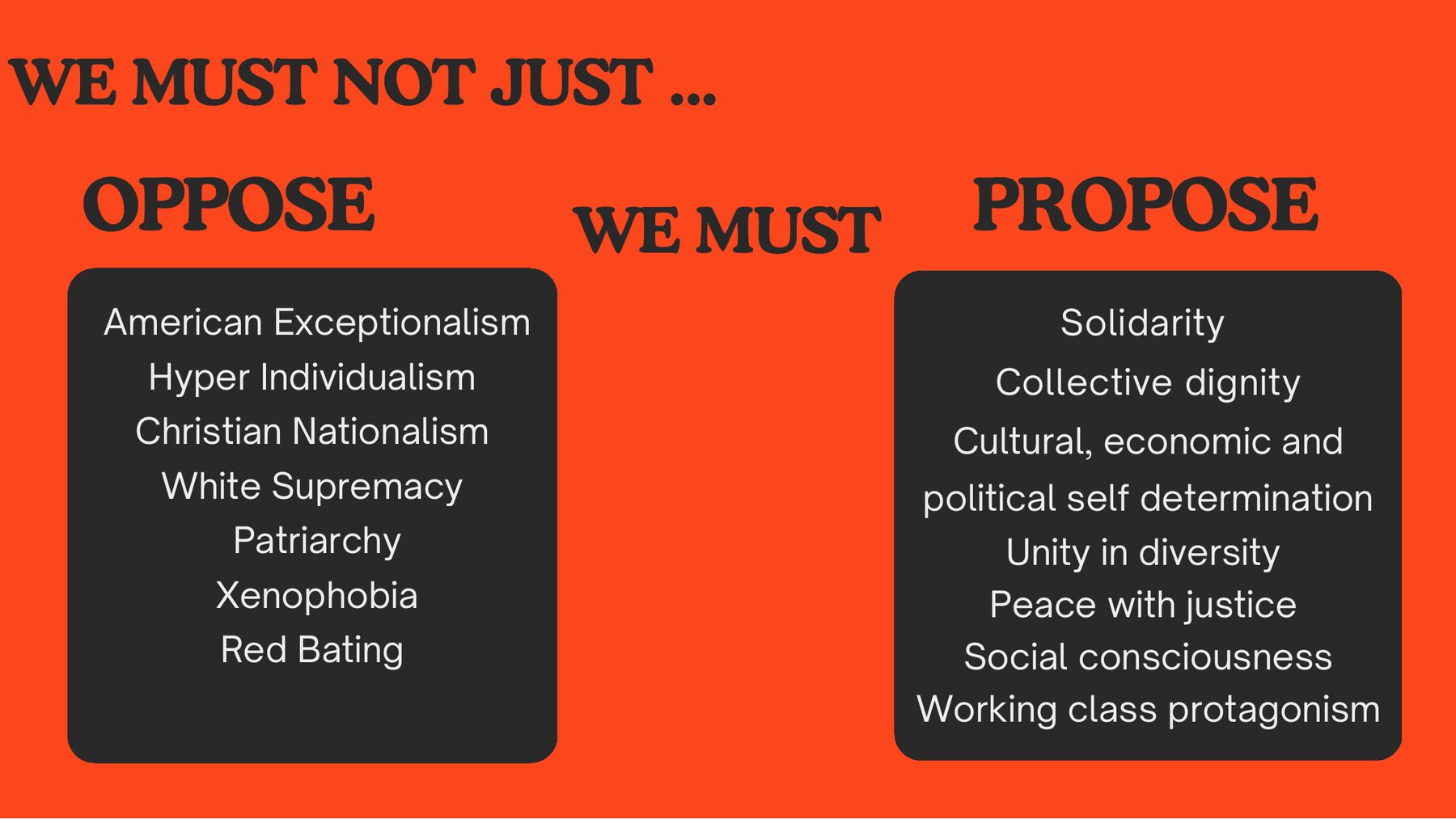
Every source in this canon does two things at once. It names an enemy — a form of power, a habit of thought, a structure that deforms cultural life. And it proposes a world. This companion makes that binary explicit. On every source page you'll find an Oppose block and a Propose block. They are the bones the rest of the argument hangs on.
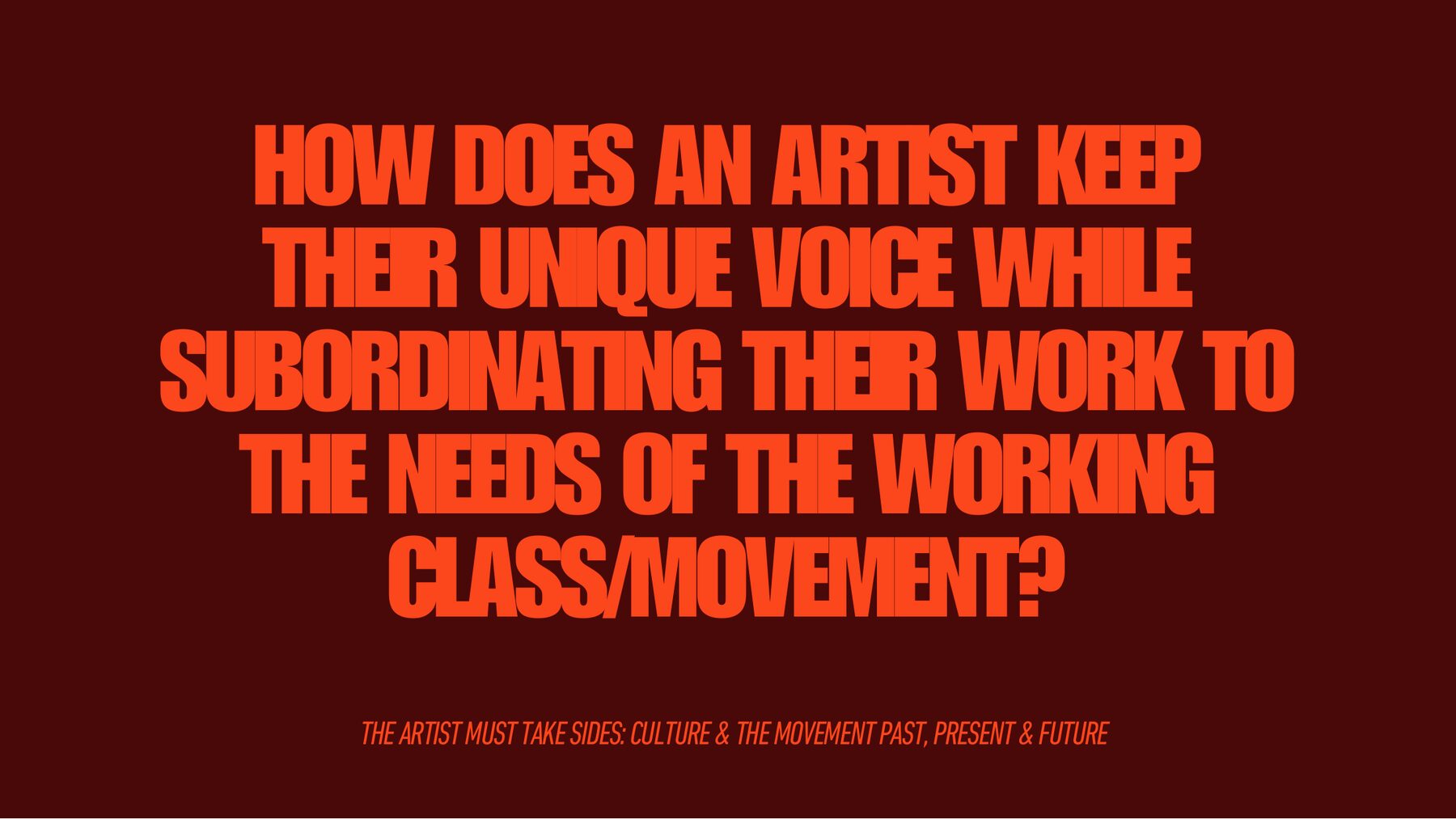
The binary is not original to this companion — the frame is literally in The People's Forum's own Session 1 deck:
From the Session 1 Deck
Slide from The Weapon of Culture, Session 1, The People's Forum — peoplesforum.org. The companion extends this frame to every source.
Making it visible on every source turns reading into position-taking, which is what the course asks of you.
Six theses to carry
Culture is the foundation. Art is the expression.
Culture is a weapon. We are fighting for working-class hegemony; to that end, we must produce a revolutionary culture.
When producing or consuming culture we must ask: whose interests does this work advance? what politics and values does it normalize or advance? what does it propose? who gets to make it, and who gets to see it?
The role of an organizer is to integrate cultural work into political formation — not as adornment, but as an integral part of the battlefield of ideas.
The role of an artist or culture worker is to understand their production as part of a collective process and for collective advancement.
We must produce, defend, and circulate art and culture that builds working-class confidence, imagination, and a fighting spirit.
Session 01
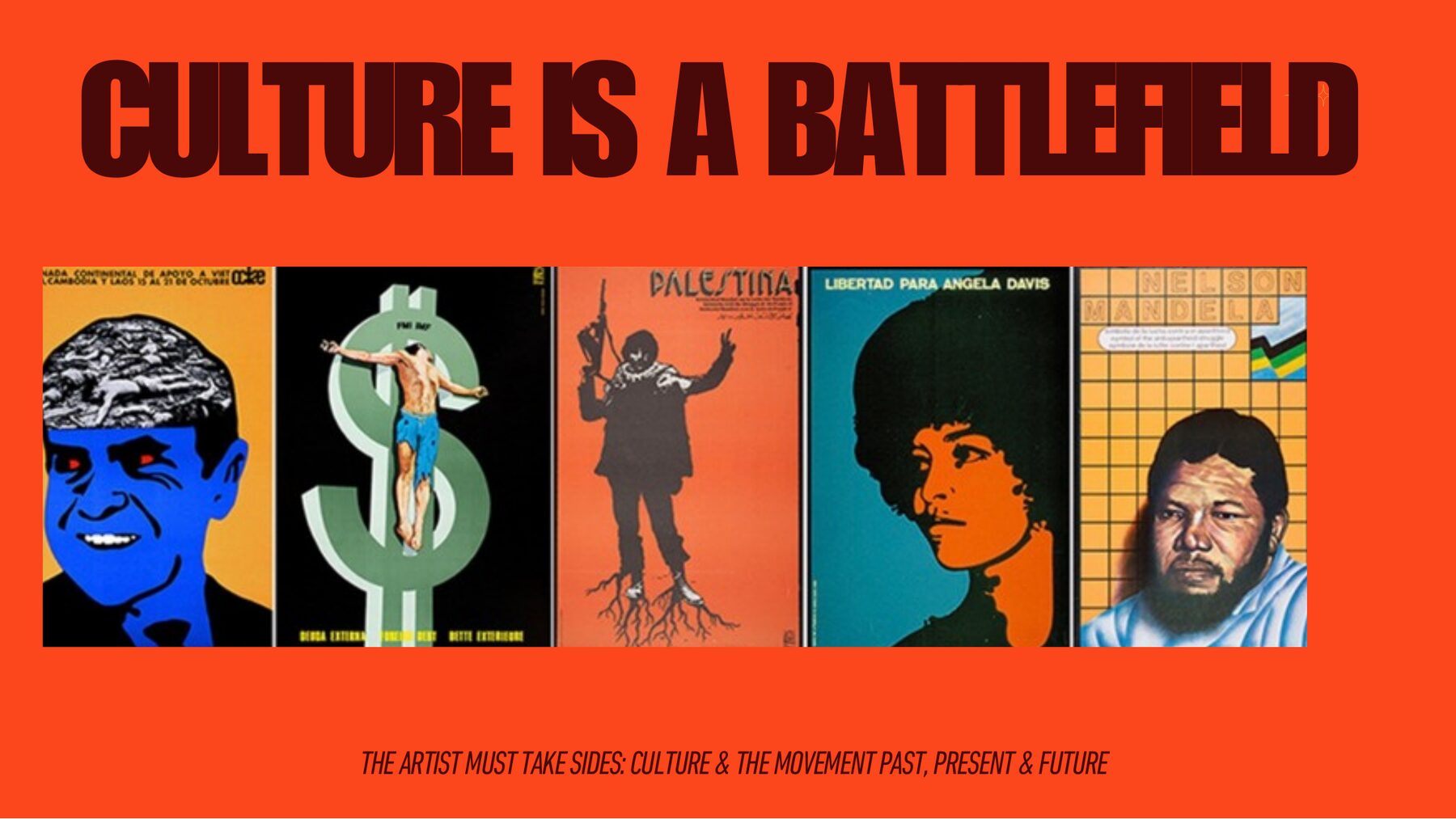
Culture Is a Battlefield
The Artist Must Take Sides · Culture & The Movement Past, Present & Future
Eight sources. Together they make the argument that culture is not a mirror of politics but a terrain of political struggle — fought in songs, books, essays, speeches, posters, and institutions. Who gets to make meaning, whose meaning counts as common sense, and what it costs to produce culture that sides with working people and against empire.
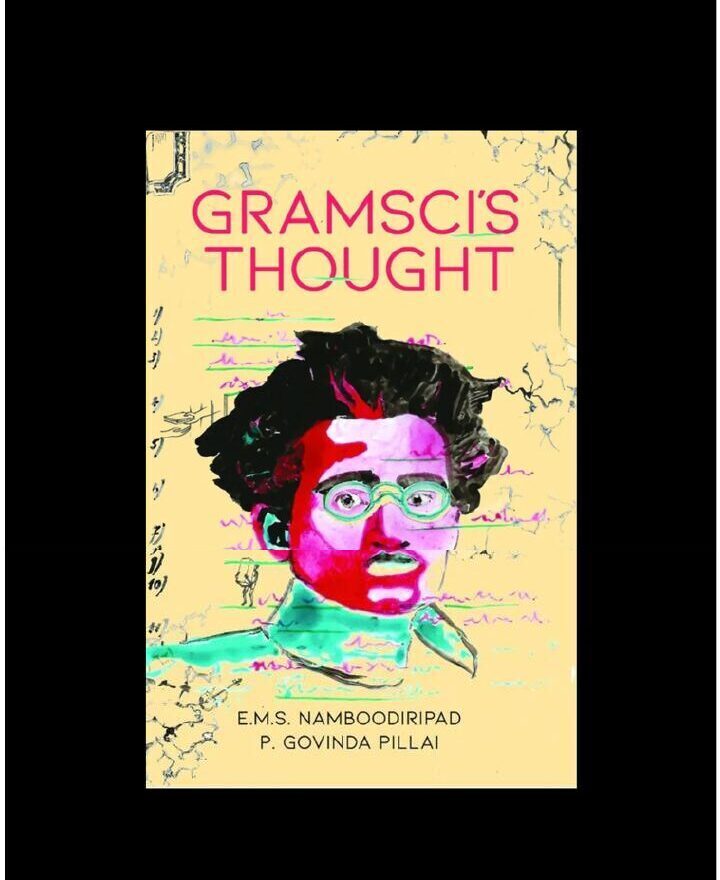
Antonio Gramsci · 1891–1937 · cover art, Gramsci's Thought
Thesis
The course opens with Gramsci because Gramsci named the terrain. Power in developed capitalist societies is not held by the state alone; it is held in the everyday common sense that circulates through schools, newspapers, pulpits, pop songs, and family dinners. Gramsci called that consent-terrain hegemony, and he argued that any serious movement for socialism had to fight on it — patiently, institutionally, culturally — before it could fight on the terrain of the state.
The Namboodiripad–Pillai book is deliberately an introduction, not Gramsci's own text. That choice matters. The course is reading Gramsci through a global South Marxist lens — E.M.S. Namboodiripad was a founding leader of the Communist Party of India (Marxist) and the first Chief Minister of Kerala; P. Govinda Pillai was a Kerala writer and party theorist. Reading Gramsci through Kerala rather than through the Anglo-American academy reframes him: not as a footnote to Western Marxism but as a theorist of how the colonized and working classes actually remake culture.
The man
Gramsci was born in Ales, Sardinia in 1891 — poor, hunchbacked from a childhood injury, and sharp. He worked his way to the University of Turin on a scholarship, where he was shaped by the ferment of northern Italian factory struggles and broke with reformist socialism. In 1919 he co-founded the weekly L'Ordine Nuovo (The New Order), which became a theoretical organ for the factory council movement. In 1921 he was among the founders of the Communist Party of Italy (PCd'I); he became its General Secretary in 1924.
In November 1926, Mussolini's Fascist regime arrested him despite his parliamentary immunity. At his sentencing in 1928 the prosecutor reportedly declared: "For twenty years we must stop this brain from functioning." They did not succeed. Between 1929 and 1935, in prison, Gramsci filled roughly thirty-three notebooks — the Quaderni del carcere, the Prison Notebooks — with approximately three thousand pages of history, philosophy, cultural analysis, and strategy written under censorship and deteriorating health. He was released from prison in 1934, ill; he died in Rome on April 27, 1937, at forty-six.
The concepts you will meet
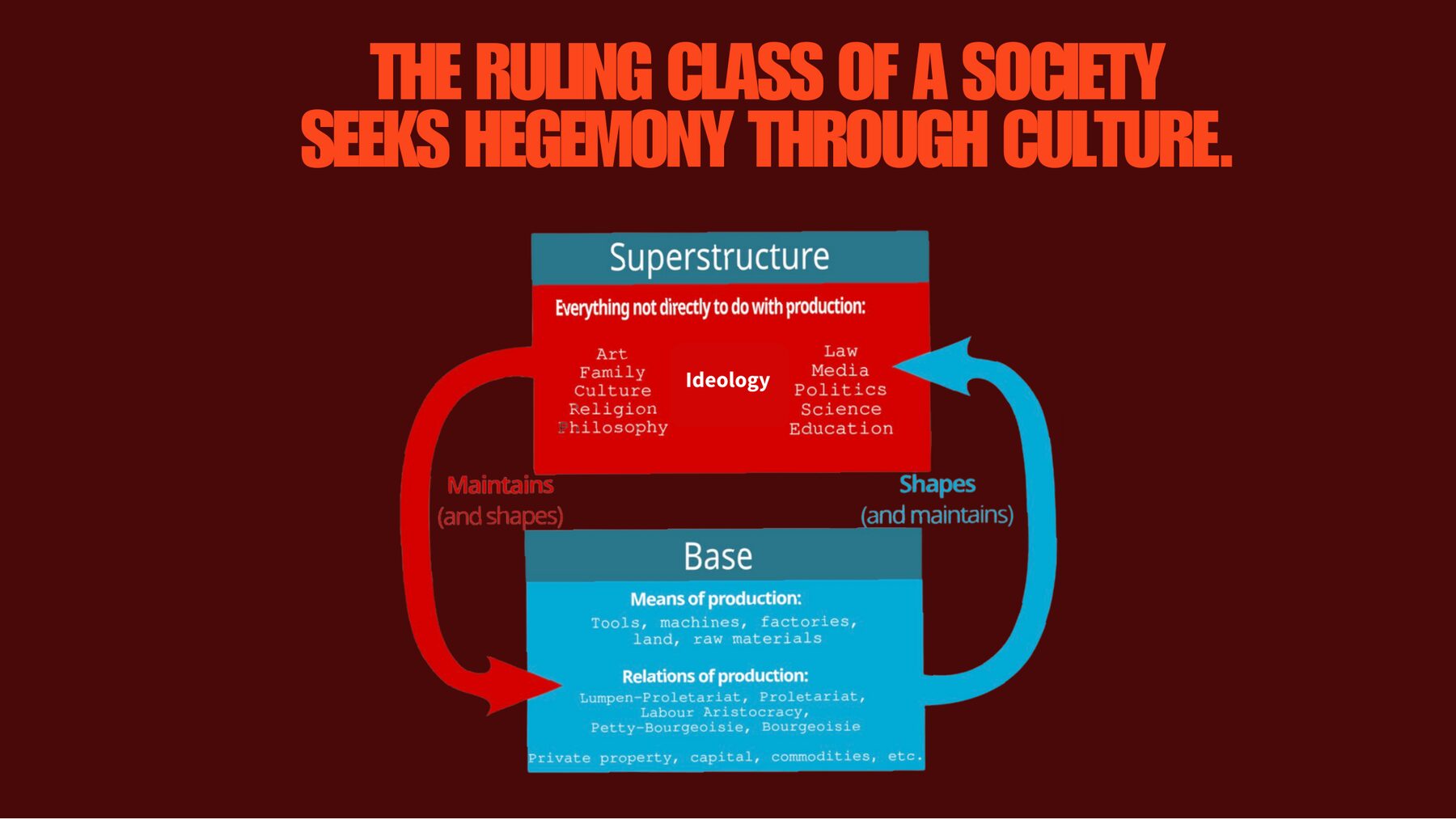
From the Session 1 Deck
The base / superstructure diagram that anchors the first session. Gramsci's move was to refuse to flatten the superstructure into an echo of the base.
Hegemony. Gramsci distinguishes two faces of ruling-class power. One is direct domination — police, courts, prisons, armies. The other is intellectual and moral leadership — the capacity to get the dominated to internalize the dominant worldview as common sense. The first holds a society at gunpoint. The second doesn't need the gun most of the time, because most people have already agreed. Hegemony is the second.
Civil society vs. political society. Where coercion lives in political society (the state, narrowly), hegemony lives in civil society — unions, churches, schools, newspapers, neighborhood associations, publishing houses, theaters. Civil society is not neutral ground; it is a battlefield. Whoever wins hegemony there shapes what the state can or cannot do later.
Organic intellectuals. Every class produces its own intellectuals — people who articulate and organize its worldview. The capitalist class has its economists, its op-ed writers, its think tanks. The working class needs its own organic intellectuals, emerging from and accountable to working-class movements, not defecting from bourgeois universities. This is a theory of who gets to speak for whom.
War of position / war of manoeuvre. In societies where civil society is weak (Russia, 1917), revolutionary strategy can be a frontal assault on the state — a "war of manoeuvre." In societies where civil society is thick (Italy, the United States, most of Europe), frontal assault fails; the state is held up by an enormous civilian scaffolding of schools, media, churches. The only serious strategy is a "war of position" — a long, patient siege of cultural and institutional positions from below.
Common sense and good sense. Popular consciousness (senso comune) is a contradictory patchwork — fragments of old religious teachings, bourgeois ideology, lived experience of exploitation, solidarity from struggle. Inside this mess Gramsci finds buon senso — good sense, the shards of clear-eyed insight that lived experience produces even under hegemony. The political task is to excavate good sense from common sense and build it into a coherent worldview.
Historic bloc. The blocco storico is an alliance of class forces unified by a shared worldview — a coherence between economic base and cultural/ideological superstructure. Revolution is the forging of a new historic bloc. The working class becomes hegemonic by assembling allies (peasants, intellectuals, marginalized groups) under a vision, not by winning a majority at the ballot box.
…WE MUST
Oppose
Crude economic determinism — the idea that consciousness automatically follows material conditions, or that workers will naturally see through dominant ideology.
The reduction of the state to coercion. The assumption that power ends where the police end.
The left tendency to treat culture as afterthought, superstructure, decoration on top of "real" politics.
Dependence on defecting bourgeois intellectuals to articulate a working-class worldview.
Propose
A long, disciplined war of position in cultural institutions — press, schools, unions, neighborhood groups, publishing — waged decades before any assault on state power.
The working class developing its own organic intellectuals — including artists — rooted in movement rather than academy.
Culture, education, and art as first-order political infrastructure, not garnish.
Building a historic bloc: assembling the class alliances and the coherent worldview that make a new society thinkable before it is buildable.
Key passages
"The 'spontaneous' consent given by the great masses of the population to the general direction imposed on social life by the dominant fundamental group; this consent is 'historically' caused by the prestige (and consequent confidence) which the dominant group enjoys because of its position and function in the world of production."
— Prison Notebooks · Hoare & Nowell Smith trans., 1971, p. 12
This is the anchor definition of hegemony. Notice that it is not "consent" in the pure sense — Gramsci puts the word in scare quotes. Consent is historically produced. The ruling class earns a kind of confidence-by-default because it visibly runs the economy; that material authority radiates outward into moral and intellectual authority. Counter-hegemony means producing an alternative center of confidence — a movement that can credibly claim to be able to run the world differently.
"The crisis consists precisely in the fact that the old is dying and the new cannot be born; in this interregnum a great variety of morbid symptoms appear."
— Prison Notebook 3, §34, written 1930
The most quoted sentence Gramsci ever wrote — and routinely corrupted. The popular English rendering, "now is the time of monsters," is a later paraphrase (often attributed to Slavoj Žižek) and is not in Gramsci. The actual passage is both harder and more useful: crisis is not catastrophe, it is an interregnum — a period in which the old order can no longer reproduce itself but the new order has not yet arrived. Fascism is one of the morbid symptoms of that gap. So is authoritarian populism, cultural reaction, millennial dread. Knowing this distinguishes a serious analysis from a doomscroll.
"I'm a pessimist because of intelligence, but an optimist because of will."
— Letter to his brother Carlo, December 19, 1929; Gramsci credits Romain Rolland
Gramsci borrows this formulation from the French writer Romain Rolland and makes it a signature. It is a discipline, not a mood. Intelligence sees the scale of the enemy clearly; will acts anyway, because action is the only condition under which a new situation can become thinkable. This is the internal posture the Prison Notebooks were written under.
How it lands in 2026
Most of what passes for "culture war" commentary in 2026 is Gramsci read badly by his enemies. The right-wing strategists of the last four decades learned Gramsci — consciously, Andrew Breitbart once said "politics is downstream from culture," which is a one-line summary of the war of position — and then the left stopped reading him. Reclaiming Gramsci means recognizing that contesting the terrain of common sense is not a distraction from "real" politics; in a society as densely mediated as this one, it is real politics. Building a counter-hegemonic press, counter-hegemonic schools, counter-hegemonic cultural infrastructure is not an aesthetic hobby. It is the work.
Gramsci also cuts against the temptation to treat cultural change as instant. War of position is slow. Forty years of conservative think tanks, legal societies, campus organizations, and media outlets built the current hegemony. Anyone who expects to reverse it in a news cycle has misunderstood the assignment.
The Radical Imagination thread
Every spatial archive Radical Imagination builds operates on Gramscian terrain. The Garvey SAM is not just a chatbot about Marcus Garvey; it contests the FBI-frame that hegemonic memory inscribed on him. Project Watchtower is not just an ICE-detention data dashboard; it contests the normalized "just the facts" framing that lets administrative violence feel like weather. Du Bois Does Data re-asserts Du Bois's sociology as foundational inside a data-visualization culture whose common sense treats its own lineage as beginning with Edward Tufte.
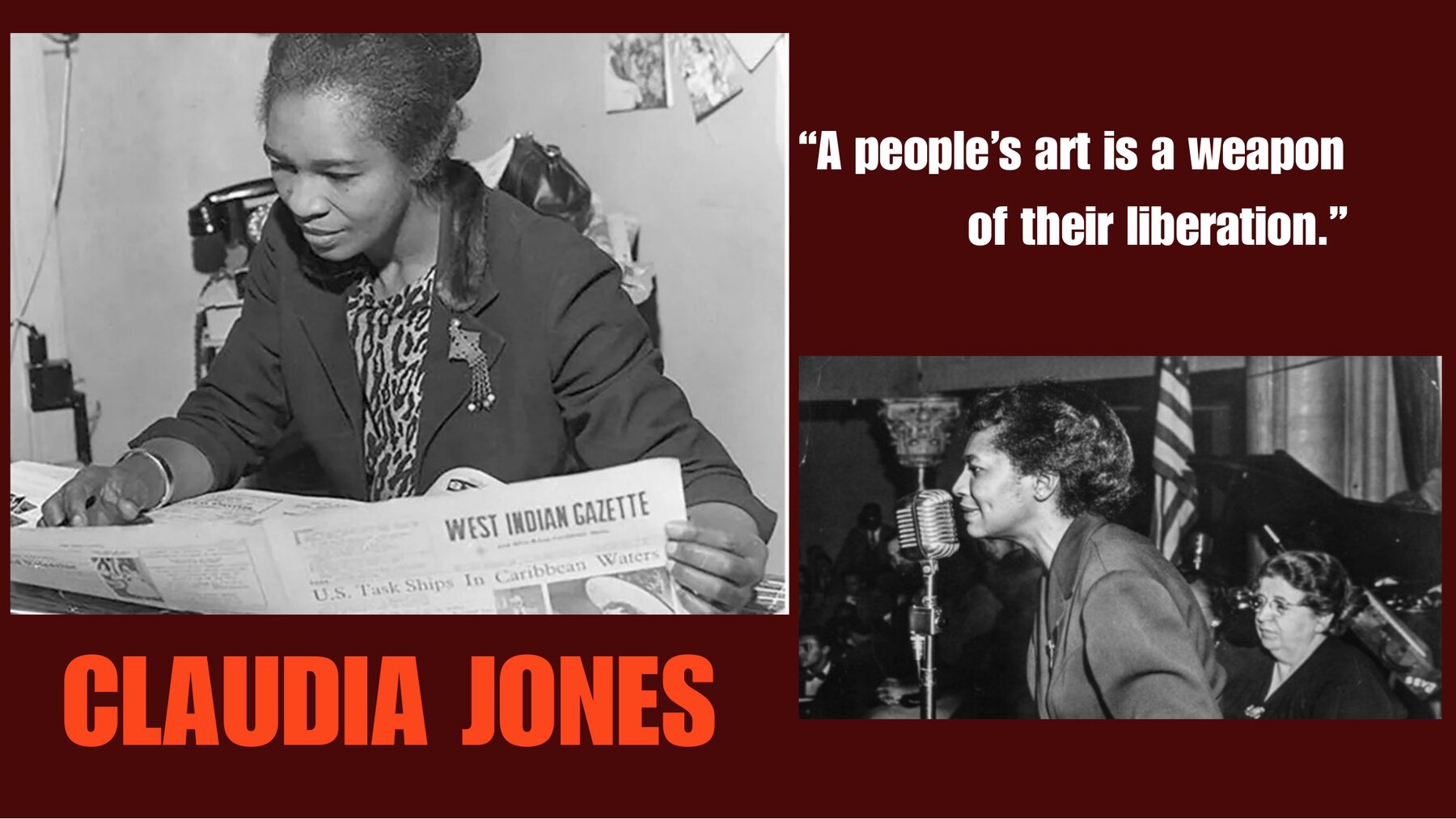
RI's own tagline — "A people's art is a weapon of their liberation," Claudia Jones, 1949 — is a Gramscian sentence avant la lettre. Jones, like Gramsci, wrote much of her theoretical work under state repression (in her case, McCarthy-era detention and deportation). The sentence she gave us belongs to the same war of position Gramsci described: cultural production as one front of a long liberation, not decoration on the side of it.
Further reading
Primary Antonio Gramsci, Selections from the Prison Notebooks, ed./trans. Quintin Hoare & Geoffrey Nowell Smith (International Publishers, 1971) — the standard English entry point.
Primary Antonio Gramsci, Prison Notebooks, critical edition ed. Joseph Buttigieg (Columbia University Press, 3 vols.) — the most complete scholarly English translation.
Primer David Forgacs, ed., The Gramsci Reader: Selected Writings 1916–1935 (NYU Press, 2000) — a shorter accessible gateway.
Essay Perry Anderson, "The Antinomies of Antonio Gramsci," New Left Review 100, 1976 — the most influential critical essay in English.
Extension Stuart Hall, "Gramsci's Relevance for the Study of Race and Ethnicity," Journal of Communication Inquiry, 1986 — how Hall used Gramsci to read Thatcherism and race.
Extension Ernesto Laclau & Chantal Mouffe, Hegemony and Socialist Strategy (Verso, 1985) — a contested post-Marxist extension.
Biography Giuseppe Fiori, Antonio Gramsci: Life of a Revolutionary (Verso, 1990) — the canonical English biography.
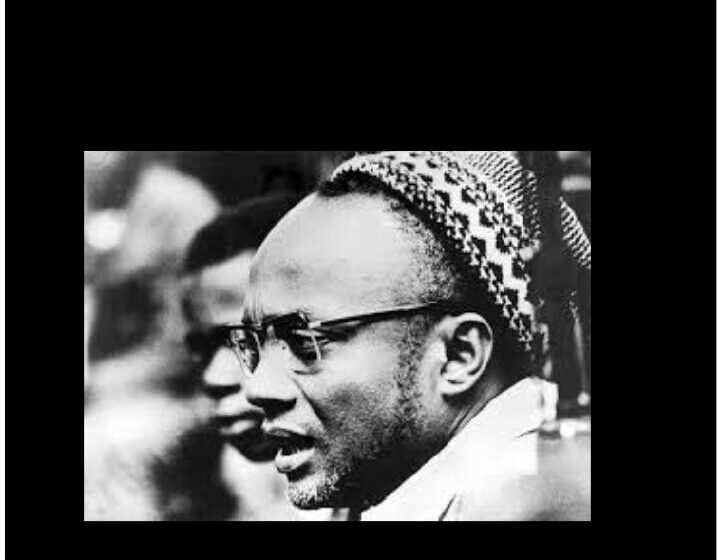
Cabral's claim is sharp and unfashionable in 1970: imperialism cannot be understood, and therefore cannot be defeated, unless culture is put at the center of the analysis. Colonial domination is not only the theft of resources and the occupation of territory; it is the "permanent, organized repression of the cultural life of the dominated people." To unmake that domination, a liberation movement has to do more than expel the colonizer — it has to re-found the people's capacity to produce their own culture from their own history.
That sounds abstract. Cabral makes it operational. The struggle in Guinea-Bissau and Cape Verde was an armed peasant war against a NATO-armed Portuguese empire, and Cabral is explaining to an international audience how culture did real logistical work in that war: it held the movement together across ethnic lines, it disciplined the cadre, it defined what victory would mean. This is not a lecture about symbols. It is a lecture about the cultural infrastructure of a liberation army.
The man
Amílcar Lopes da Costa Cabral was born in Bafatá, Portuguese Guinea (now Guinea-Bissau) on September 12, 1924, to Cape Verdean parents. He was raised in Cape Verde during the devastating drought-famines of the 1940s, an experience that made him an agronomist: he went to Lisbon on a scholarship and earned his degree in agricultural engineering in 1952, specializing in soil science. Back in Guinea, he was commissioned by the colonial administration to produce the first agricultural census of the territory — which he used, in effect, as a sociological survey of the colonized peasantry.
In 1956 he co-founded the Partido Africano da Independência da Guiné e Cabo Verde (PAIGC). After the Portuguese police massacre of striking dockworkers at Pidjiguiti in 1959, PAIGC shifted from political protest to armed struggle, and Cabral became the political and strategic leader of a peasant guerrilla war against the Portuguese empire that ran from 1963 until independence. By the early 1970s PAIGC controlled most of rural Guinea-Bissau. Cabral was assassinated in Conakry on January 20, 1973 — shot by PAIGC members acting within a Portuguese-backed conspiracy. Guinea-Bissau's independence was formally proclaimed on September 24, 1973. He did not live to see it.
The concepts you will meet
Culture as resistance. Cabral argues that a people under colonial domination survive, materially, because they continue to produce culture — a shared system of meaning, language, collective memory, ritual — that the colonizer cannot fully reach. This is not a symbolic point. It is an operational one: the capacity for collective action depends on a cultural substrate the empire has not extinguished. Liberation begins in that substrate.
Return to the source. In colonized societies a native petite bourgeoisie forms — clerks, teachers, traders, junior administrators — whose survival depends on proximity to the colonizer's language, dress, institutions. Many of them aspire to become the colonizer. The "return to the source" names the political act by which some of them break that aspiration and re-identify with the popular masses, their languages, and their cultural forms. Cabral is one of them. He is describing himself.
Class suicide. Because the revolutionary petite bourgeoisie retains the habits and interests of its class, it must commit class suicide — it must actively destroy its privileged position and be reborn as workers, or it will become the new ruling class after independence. This is Cabral's most-cited formulation and the one he was most insistent about. He saw it happening to other African liberation movements in real time.
National culture, not essential culture. Cabral rejects the romantic idea of a single, pure, pre-colonial culture to be recovered intact. Culture is produced by the living labor and struggles of a people; it is plural, uneven, and constantly changing. The "national culture" that independence builds is the culture the struggle itself produces — multi-ethnic, historically specific, tied to material transformation.
Culture and the mode of production. Following a loosely Marxist framework (but one shaped by his fieldwork as an agronomist), Cabral insists that culture is the ideological expression of a concrete material history — a mode of production, a form of social organization, a relation to the land. Cultures change when those underlying conditions change. Revolution is, among other things, a change of cultural conditions.
Tell no lies, claim no easy victories. This phrase is not from National Liberation and Culture itself — it comes from PAIGC's internal party watchwords ("General watchwords," 1965) — but it is the ethical spine of the speech. Cultural liberation is only credible if the movement tells the truth about its own conditions, its own losses, its own failures. Cabral's discipline is anti-triumphalist.
…WE MUST
Oppose
The colonial claim that the dominated people have "no history" — the foundational lie of empire and of the anthropology departments that serviced it.
The romantic nativism that freezes colonized culture into a pre-colonial museum piece, ignoring that culture is produced, not inherited whole.
The petite-bourgeois independence leader who takes the colonizer's seat and keeps the colonizer's habits — the post-colonial state as continuation of colonial extraction.
Revolutionary rhetoric that does not produce material improvements in people's lives. (People are not fighting for ideas.)
Propose
Cultural liberation as a condition — not a consequence — of political liberation.
The revolutionary petite bourgeoisie committing class suicide; re-identifying with the popular masses by giving up its distance from them.
A dynamic national culture built out of the plural material histories of the people, not a single essentialized "authentic" past.
An ethic of truth-telling inside the movement — "Tell no lies. Claim no easy victories."
Key passages
"The value of culture as an element of resistance to foreign domination lies in the fact that culture is the vigorous manifestation on the ideological or idealist plane of the physical and historical reality of the society that is dominated or to be dominated. Culture is simultaneously the fruit of a people's history and a determinant of history, by the positive or negative influence which it exerts on the evolution of relationships between man and his environment, among men or groups of men within a society, as well as among different societies."
— National Liberation and Culture, 1970; collected in Return to the Source
This is the thesis sentence of the speech. Note the two-way structure: culture is both a product of a society's material history and a force that shapes that history going forward. Cabral is refusing both mechanical determinism (culture is only an effect) and idealism (culture floats free of material conditions). Culture sits in the loop between the two. This is close to what Gramsci called the dialectic of base and superstructure, and Cabral arrived at it independently, from inside an armed peasant struggle.
"In order to truly fulfill the role in the national liberation struggle, the revolutionary petite bourgeoisie must be capable of committing suicide as a class in order to be reborn as revolutionary workers, completely identified with the deepest aspirations of the people to which they belong."
— The Weapon of Theory, address to the Tricontinental Conference, Havana, January 1966
This is from an earlier speech, but it is the single clearest formulation of the "class suicide" argument that runs through National Liberation and Culture. Cabral is warning — in 1966, before most of African independence had consolidated — about exactly what happened across the continent in the 1970s and 1980s: independence leaders who did not break with the colonial class structure became the new extracting class. Class suicide is the anti-elite-capture discipline.
"Always bear in mind that the people are not fighting for ideas, for the things in anyone's head. They are fighting to win material benefits, to live better and in peace, to see their lives go forward, to guarantee the future of their children."
— General Watchwords, PAIGC, 1965
The test Cabral sets for any political work. It is not a rejection of ideas — Cabral spent his life writing and teaching theory — it is a rejection of ideas that do not produce material improvements for the people fighting. You can check any movement, any organization, any grant-funded project against this sentence. If the ideas are not showing up as food, housing, safety, time, futures — the test is failed.
How it lands in 2026
Cabral's National Liberation and Culture is the clearest defense in print of why a liberation movement cannot outsource its cultural work. In 2026 that question returns in a different register: it is not empires that dominate the cultural field so much as platforms, foundations, and their aligned media. The "return to the source" in our moment is the refusal to let liberation movements have their aesthetics and their theory shaped primarily by the institutions that fund them — the grant language, the conference circuit, the branded-content economy.
"Class suicide" is also overdue for serious re-reading. The petite bourgeoisie Cabral warned about — the intermediary professional class that articulates a movement's message to funders and media while drifting upward materially — is now global and heavily credentialed. His question stands: are the people who speak for the movement still identified with the people the movement is supposed to win material benefits for?
The Radical Imagination thread
Cabral's insistence that culture is produced — not inherited intact — is the working premise of every Radical Imagination project. When RI builds a Small Archive Model for Garvey, for Wells, for Du Bois, the claim is not that we are recovering an unchanged pre-colonial essence. The claim is that these archives are re-assembled out of the material histories of Black liberation work, and that the assembly itself is cultural production — contemporary, situated, political.
The tell no lies discipline is load-bearing for RI's posture on sources. Every figure in our archive comes with surveillance documents, hostile press, and hagiography stacked next to their own words. The practice is to surface all of it and not to smooth any of it — that is what verification-posture means in this studio, and it is a Cabralist commitment.
Further reading
Primary Amílcar Cabral, Return to the Source: Selected Speeches (Monthly Review Press, 1973) — includes National Liberation and Culture.
Primary Amílcar Cabral, Unity and Struggle: Speeches and Writings (Monthly Review Press, 1979) — the fuller collection.
Primary Amílcar Cabral, Revolution in Guinea (Monthly Review Press, 1969) — earlier speeches including The Weapon of Theory (Tricontinental, 1966).
Biography Patrick Chabal, Amílcar Cabral: Revolutionary Leadership and People's War (Cambridge University Press, 1983) — the canonical English biography.
Extension Firoze Manji & Bill Fletcher Jr., eds., Claim No Easy Victories: The Legacy of Amílcar Cabral (CODESRIA / Daraja Press, 2013) — over 40 essays on Cabral's continued relevance.
Extension Reiland Rabaka, Concepts of Cabralism: Amílcar Cabral and Africana Critical Theory (Lexington, 2014).
Context Basil Davidson, The Liberation of Guiné: Aspects of an African Revolution (Penguin, 1969) — firsthand reportage from inside PAIGC-liberated zones.
Online Amílcar Cabral archive at the Mário Soares Foundation — casacomum.org
Questions to bring to class
1 · Cabral says culture is the condition of political resistance. What cultural ground is being contested on your terrain right now — and who is holding it?
Unsaved
2 · What would "class suicide" mean for the intellectuals, artists, or professionals in your life — including you?
Unsaved
3 · "People are not fighting for ideas." Run your current project through this test. What material benefits is it producing, and for whom?
Unsaved
Source 03 · Song · Session 1
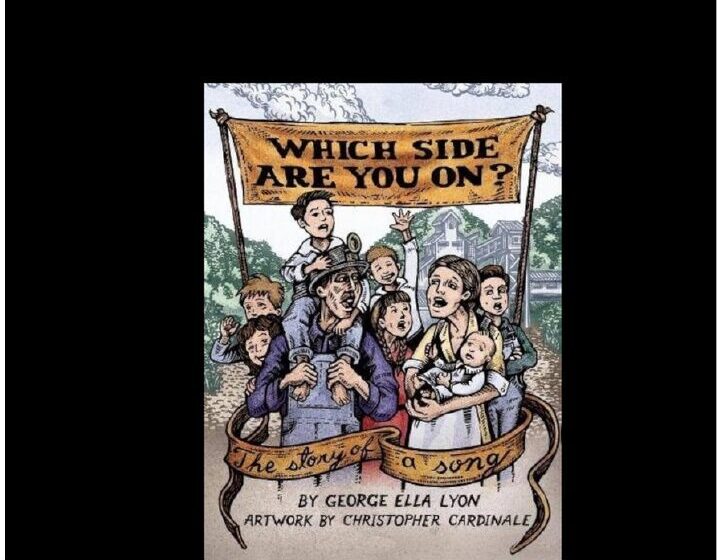
Which Side Are You On?
Florence Reece — written in the Harlan County coal-miners' war, 1931, Molus, Kentucky.
A protest song is a piece of portable political infrastructure. Florence Reece wrote one in 1931 — a single page of verses set to a tune her community already knew — and it has been on American picket lines for ninety-five years. Understanding why means taking seriously what the song refuses: neutrality. Reece names the terrain of the Harlan County war and insists that on that terrain, there is no outside. You are with the union or you are a thug for the boss. The song's power is not that it persuades the undecided; it is that it removes undecided as a position you can hold and still face your neighbors in the morning.
The song, in its moment
Harlan County, Kentucky, 1931. The National Miners Union was organizing against the coal operators. The county sheriff, J.H. Blair, was on the coal companies' payroll and led a force of deputized "gun thugs" who broke up union meetings, raided miners' homes, and killed organizers. Reece's husband Sam was a union organizer on Blair's list. On an afternoon when Blair's men raided the Reece family home looking for Sam, Florence wrote the lyrics on a kitchen calendar, fitting them to the traditional Anglo-American ballad tune "Jack Monroe." The song spread along picket lines first, recording industry later.
The strike that produced the song — the Harlan County War — was brutal. Miners were shot, jailed on trumped-up murder charges, starved into scab labor. A national investigation led by the novelist Theodore Dreiser (Harlan Miners Speak, 1932) documented the terror. The song outlived the strike. It was picked up by the Almanac Singers in 1941, by Pete Seeger repeatedly, by the civil-rights movement (who sang it through Mississippi), by the 1973–74 Brookside Strike (where Reece, then 73, sang it again for Barbara Kopple's camera in Harlan County, USA), and by labor actions and racial-justice protests every decade since.
The full lyrics (Florence Reece, 1931)
Come all of you good workers,
Good news to you I'll tell
Of how the good old union
Has come in here to dwell.
Which side are you on, boys?
Which side are you on?
Which side are you on, boys?
Which side are you on?
My daddy was a miner,
And I'm a miner's son,
And I'll stick with the union
Till every battle's won.
They say in Harlan County
There are no neutrals there.
You'll either be a union man
Or a thug for J.H. Blair.
Oh, workers can you stand it?
Oh, tell me how you can.
Will you be a lousy scab
Or will you be a man?
Don't scab for the bosses,
Don't listen to their lies.
Us poor folks haven't got a chance
Unless we organize.
— Florence Reece, written Harlan County, Kentucky, 1931. Original lyrics as first recorded; public domain.
What the song is doing
The binary as clarity, not simplification. "There are no neutrals there" — this is the song's central claim and the one most resisted by its critics. The song insists that in a real class fight, an unstated position is not an independent one; it is the position the stronger side collects by default. In 1931 Harlan, to refuse to choose was to refuse only in words; in material terms you were already with J.H. Blair. The song does not create the binary. It names it.
Song as portable organizing technology. Reece's lyrics are set to a tune her community already sang — the ballad "Jack Monroe." Anyone on the picket line could learn a chorus in one pass. This is deliberate: the song is not a work to be performed at you, it is a tool to be carried by you. The measure of the song is how many new pickets pick it up, not how well a soloist can render it.
Authorship from the kitchen, not the stage. Reece was not a professional songwriter, a union officer, or a "cultural worker" by title. She was a miner's wife, a mother of nine, writing while her husband was on a hit list. Her authorship is a reminder that the American labor song tradition was held significantly by women at home — Aunt Molly Jackson, Sarah Ogan Gunning, Ella May Wiggins — while men were at the mine or in jail.
The song is open source."Which Side Are You On?" has been re-written dozens of times — by the Almanac Singers for the New York City transit strike, by James Farmer and the Freedom Riders for civil rights, by Billy Bragg for Thatcher-era Britain, by Natalie Merchant, Ani DiFranco, Rebel Diaz, and the Rebel Dykes. The tune carries; the verses get replaced. The song belongs to the picket, not the author.
Culture as "return to the source," before Cabral named it. Reece used the song-form her community already spoke. The tune was Anglo-Scots-Irish balladry carried into the Appalachian coalfields. The genius of the song is that its authority is entirely inside the tradition it mobilizes — it does not require union organizers to import an outside aesthetic. Cabral would recognize this move forty years later.
…WE MUST
Oppose
The false neutrality that in every real class fight is already a position on the side of the stronger party.
The polished, copyrighted protest song — the one you can't sing unless you have a band.
The separation of "art" from "organizing," where culture is a thing professionals produce and the movement consumes.
The romanticization of the Harlan County war into a museum piece — an heirloom labor history severed from any present picket.
Propose
A cultural practice that names the actual sides of a fight clearly enough that a seven-year-old can pick them out.
Songs as portable organizing technology — familiar tunes carrying new political demand to the next picket.
Cultural production from inside the household and the community, not just the professional composer class.
Works held open for re-writing, re-singing, re-mixing by whoever is standing on a line right now.
How it lands in 2026
"Which Side Are You On?" is one of a small handful of American songs that crosses movement boundaries on its own — no marketing required. It showed up in Madison, Wisconsin, during the 2011 public-sector strikes; in Ferguson, 2014; on picket lines with striking Amazon warehouse workers; at Starbucks Workers United actions; at "Stop Cop City" forest defense camps; at Columbia and Barnard encampments in 2024. Each time, the lyrics get rewritten to name the current opponent. The tune holds.
The enduring provocation is the refusal of neutrality. In 2026 that refusal is under renewed pressure — the managerial register of most institutional communication is built around the denial that sides exist. Reece's song is a direct contradiction of that register. It is also a test: if your institution cannot sing along to this song without disclaimers, notice that.
The Radical Imagination thread
RI's Project Watchtower (ICE detention data transparency) is a Reece project more than it is a Du Bois one. The point is not to provide balanced information; the point is to remove the position "I did not know" from being available. Watchtower does for the administrative violence of detention what "Which Side Are You On?" does for the sheriff's thugs: it names the terrain and refuses the comfort of not deciding.
Reece also sets a compositional standard for RI's cultural work: the song is a page long, it is open source, it is portable, it is made for a picket line rather than a gallery. That posture — minimum tooling, maximum portability, easy to adapt, owned by whoever is using it — is the posture of every SAM we ship.
Further reading
Primary Florence Reece, original 1931 lyrics — public domain, widely reprinted; authoritative text at the Library of Congress.
PrimaryHarlan Miners Speak: Report on Terrorism in the Kentucky Coal Fields, National Committee for the Defense of Political Prisoners, 1932 — contributions from Theodore Dreiser, John Dos Passos, Sherwood Anderson.
Biography John W. Hevener, Which Side Are You On?: The Harlan County Coal Miners, 1931–39 (University of Illinois Press, 1978) — the canonical historical study of the strike.
Film Barbara Kopple, dir., Harlan County, U.S.A. (1976) — Academy Award for Best Documentary Feature; includes Reece herself, age 73, singing the song at a strikers' meeting during the 1973 Brookside Strike.
Context Archie Green, Only a Miner: Studies in Recorded Coal-Mining Songs (University of Illinois Press, 1972) — the scholarly ground of the Appalachian labor-song tradition.
Context Robert Cantwell, When We Were Good: The Folk Revival (Harvard, 1996) — how Reece's song entered the Seeger / Almanac / Dylan-era canon.
Recording Pete Seeger, American Industrial Ballads (Folkways Records, 1956) — early canonical recording; Almanac Singers, Talking Union (Keynote, 1941) — the movement's own recording.
Online Library of Congress, American Folklife Center — Florence Reece interview and field recordings, loc.gov.
Questions to bring to class
1 · Reece insists "there are no neutrals here." Is there a fight in your life right now where you have been treating "undecided" as a position? Name it.
Unsaved
2 · Rewrite one verse of the song for a picket line you care about right now. Who are the J.H. Blairs? Who are the miners?
Unsaved
3 · What is a piece of "portable organizing technology" — a song, a chant, a visual, a ritual — already carried by a movement you are part of? What would you add to it?
Unsaved
Source 04 · Book · Session 1
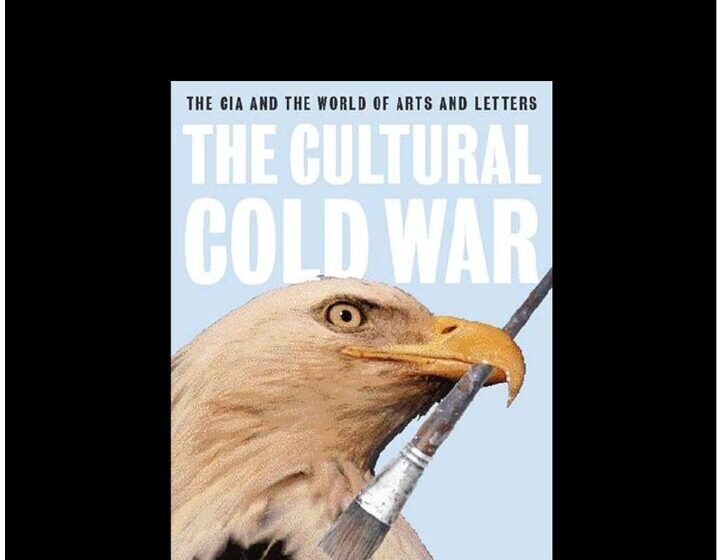
The Cultural Cold War
Frances Stonor Saunders — The Cultural Cold War: The CIA and the World of Arts and Letters, The New Press, 2000 (UK edition 1999 as Who Paid the Piper?).
Archive period · 1947–1967Chief subject · The Congress for Cultural Freedom
Frances Stonor Saunders · The Cultural Cold War, 2000
Thesis
Saunders' book is the most complete reconstruction in English of an operation that most of the American literary and art world lived inside without knowing: the Central Intelligence Agency's Congress for Cultural Freedom (1950–1967), which funneled covert money through foundation fronts to underwrite roughly 170 magazines, an international concert circuit, touring exhibitions, conferences, book translations, and the livelihoods of dozens of prominent anti-communist intellectuals. The book's argument is not that the CIA produced postwar Western culture. The argument is that the CIA paid, at scale, to shape what counted as sophisticated Western culture — and that the consensus we call "the liberal intellectual climate of the 1950s and 1960s" cannot be read honestly without knowing who paid for it.
For the course, Saunders is the empirical proof that Gramsci was describing something real. The state does invest in cultural hegemony. It does so covertly when coercion is politically costly. And it is willing to spend enormous sums to ensure that the "free" intellectual field abroad produces conclusions compatible with its geopolitical interests.
The author
Frances Stonor Saunders is a British historian and journalist. She produced her first major work on the cultural Cold War as a Channel 4 television documentary, then spent the next six years expanding it into Who Paid the Piper? (Granta, 1999) — published in the United States in 2000 under the less quotation-friendly title The Cultural Cold War. Her research drew on newly declassified CIA records, the papers of the Congress for Cultural Freedom at the University of Chicago, and over a hundred interviews with surviving CCF officers, CIA case officers, and participating intellectuals. Saunders is not a polemicist; the book is patient, archivally grounded, and willing to sit with the moral complexity of intellectuals who genuinely believed they were defending freedom while being paid by a spy agency.
The concepts you will meet
The Congress for Cultural Freedom (CCF). Founded at a 1950 conference in West Berlin, nominally an organization of anti-totalitarian intellectuals, the CCF was in fact run out of the CIA's International Organizations Division under Tom Braden. By the late 1950s it had permanent offices in 35 countries, a staff of professional bureaucrats (led by executive secretary Michael Josselson, a CIA officer), and operating budgets routed through laundering fronts like the Farfield Foundation.
Cultural laundering. The CIA rarely produced the content it promoted. It funded — through deniable conduits — magazines, conferences, tours, and grants that already served its purposes: to demonstrate that Western culture was richer, freer, and more sophisticated than anything the Soviet bloc could produce. The laundering was the operation. The artists and writers were mostly sincere.
The journals. CCF money produced, directly or indirectly, Encounter (London, with Stephen Spender and Irving Kristol as founding editors), Preuves (Paris), Der Monat (Berlin), Cuadernos (Latin America), Quadrant (Australia), Tempo Presente (Italy), Hiwar (Arab world), Transition (Uganda, briefly), and American satellites like Partisan Review. Saunders reconstructs the funding trail for each.
Abstract Expressionism as Cold War weapon. Saunders documents how the Museum of Modern Art, working with CIA-adjacent Rockefeller networks, pushed touring exhibitions of Pollock, de Kooning, and Rothko through Europe as proof of American artistic liberty. The artists themselves mostly did not know. The curatorial apparatus — what got shown, where, paid for by whom — did know.
The 1967 exposure. In March 1967, the New-Left magazine Ramparts revealed that the National Student Association had been CIA-funded. The thread led directly to the Congress for Cultural Freedom. Within months, the New York Times confirmed the full operation. Many CCF participants said they had not known. A small number — editors, officers — had known. The CCF was renamed the International Association for Cultural Freedom (quietly dropping the CIA funding, picking up Ford Foundation money) and limped on until 1979.
The "not-Stalinist" trap. Saunders' most careful chapters are about the intellectuals who signed on sincerely because they were genuinely horrified by Stalinist terror and thought the alternative was a vigorous anti-totalitarian liberalism. Her point is not to condemn their anti-Stalinism; her point is that a serious anti-Stalinism that does not examine its own patrons ends up being the left flank of empire.
…WE MUST
Oppose
The myth that postwar Western "cultural freedom" was an organic, market-produced, state-independent condition.
The reading of the Cold War as a purely military or geopolitical contest.
The intellectual-as-free-agent posture that refuses to examine the institutional money that pays its rent.
The weaponized anti-Stalinism that used the moral clarity of the gulag to launder the foreign-policy goals of the CIA.
Propose
A materialist reading of cultural prestige that follows the money to the foundation, the trust, the agency.
Culture treated as a primary field of state contestation — not downstream of geopolitics but constitutive of it.
An institutional honesty about how funding infrastructure shapes what can be said, shown, translated, and cited.
A working question in every cultural project: who paid the piper? — asked without embarrassment, before the fact.
Key passages
"During the height of the Cold War, the US government committed vast resources to a secret programme of cultural propaganda in western Europe. A central feature of this programme was to advance the claim that it did not exist."
— Frances Stonor Saunders, The Cultural Cold War, opening of Chapter 1
The book's thesis sentence. Notice what Saunders is claiming: not that American culture was uniformly CIA-produced, but that its appearance of spontaneity and freedom was itself the operation's signature move. This is where Saunders meets Gramsci exactly. Hegemony works by appearing as nature — the ordinary, uncurated, uncommissioned field where ideas simply flourish. The secret programme's first task was to maintain that appearance.
"I'm proud of these operations. The Congress for Cultural Freedom is just one example of many activities undertaken by the Agency's International Organizations Division… we had to help the non-communist left."
— Tom Braden, former head of the CIA's International Organizations Division, in "I'm glad the CIA is 'immoral'" Saturday Evening Post, 20 May 1967 — quoted throughout Saunders
Braden's 1967 article, written after the Ramparts exposure, confirmed the full scope of the operation on the record. Saunders uses Braden extensively as primary documentation — he is the insider who both ran the program and defended it publicly once it was blown. His confession is the empirical backbone of the whole book: this is not speculation, this is the CIA officer himself listing what was funded.
"The nature of the CIA's intervention was not to transmit directives to subordinate writers but to construct an entire intellectual milieu — to pay for the conferences, fund the magazines, endow the prizes, commission the translations, and thereby shape what counted as the serious conversation of the age. Most participants did not need instructions, because the field itself had been produced around them."
— Paraphrase of Saunders' core argument across chapters 13–19 of The Cultural Cold War
This is the operational corollary of the thesis. The CCF did not employ writers the way a propaganda ministry employs writers; it built the venues, the audiences, the prestige, the circulation — and then the writers who succeeded in that field were the writers whose work fit the venues. This is structurally identical to how present-day foundation-funded cultural fields work. The point is not that individual writers lied; the point is that the field selected for certain conclusions in advance.
How it lands in 2026
The CIA's Congress for Cultural Freedom was shut down (sort of) in the late 1960s. What replaced it is worth examining: the large private foundations — Ford, Rockefeller, MacArthur, Open Society — took over much of the infrastructure, along with a vastly expanded commercial sector of platforms and endowments. Saunders' question does not go away; it changes vendor. In the 2020s the more productive version of the question is: what does it mean for a cultural field to be almost entirely financed by a small number of strategic philanthropic actors, and what conclusions does that field pre-select for?
The second lesson of the book is about how cultural prestige launders political alignment. The artists did not know. Most writers did not know. But the prestige their work accumulated was being pointed, by people who did know, at an outcome. 2026 equivalents: the AI ethics circuit, the climate philanthropy field, the "democracy" grant portfolios — none of them reducible to their funders, but none of them coherent without accounting for them.
The Radical Imagination thread
Saunders is the book every cultural-heritage studio needs to read before its first institutional grant. RI's discipline of the two-arm funding model — cultural heritage funded by grants, commercial XR generating revenue — is a direct response to the Saunders problem. We are explicit about who pays for which arm of the work so that the cultural arm retains the capacity to say things its funders may not love. That is a Saunders-shaped guardrail, and it belongs in the founding document.
The book also grounds the RI posture on archives. Every surveillance file in our Garvey corpus, every "objective" FBI page, was produced by an institution whose stated goal was to destroy the movement it was documenting. Saunders teaches us that the financial lineage of a cultural object is part of the object. That is why our sources registries name the funder, the agency, the year — not as bibliographic tidiness but as political information.
Further reading
Primary Frances Stonor Saunders, The Cultural Cold War: The CIA and the World of Arts and Letters (The New Press, 2000) — the book under discussion.
Primary Thomas W. Braden, "I'm glad the CIA is 'immoral'," Saturday Evening Post, 20 May 1967 — the insider confession after the Ramparts exposure.
Primary Sol Stern, "NSA and the CIA," Ramparts, March 1967 — the exposure that broke the CCF story.
Extension Hugh Wilford, The Mighty Wurlitzer: How the CIA Played America (Harvard University Press, 2008) — the fullest scholarly account of the CIA's domestic cultural operations.
Extension Joel Whitney, Finks: How the C.I.A. Tricked the World's Best Writers (OR Books, 2017) — a sharper update focused on the Paris Review, García Márquez, Baldwin, and the later Cold War.
Extension Serge Guilbaut, How New York Stole the Idea of Modern Art (University of Chicago Press, 1983) — the canonical text on Abstract Expressionism and postwar cultural power.
Extension Eva Cockcroft, "Abstract Expressionism, Weapon of the Cold War," Artforum, June 1974 — the essay that first made the argument in the U.S. art press.
Online The Congress for Cultural Freedom papers, University of Chicago Library Special Collections — finding aid.
Questions to bring to class
1 · Saunders asks: who paid the piper? Pick a cultural field you work in, or deeply consume. Who pays for it — really? What conclusions does that funding pre-select?
Unsaved
2 · Most CCF intellectuals did not know. What is the contemporary equivalent of "sincere and unwitting" — the work you might be doing now whose funding lineage you have not examined?
Unsaved
3 · Design a minimum-viable "who paid?" audit for one project on your desk right now. What would you have to trace, and who would you have to ask?
Unsaved
Source 05 · Essay · Session 1
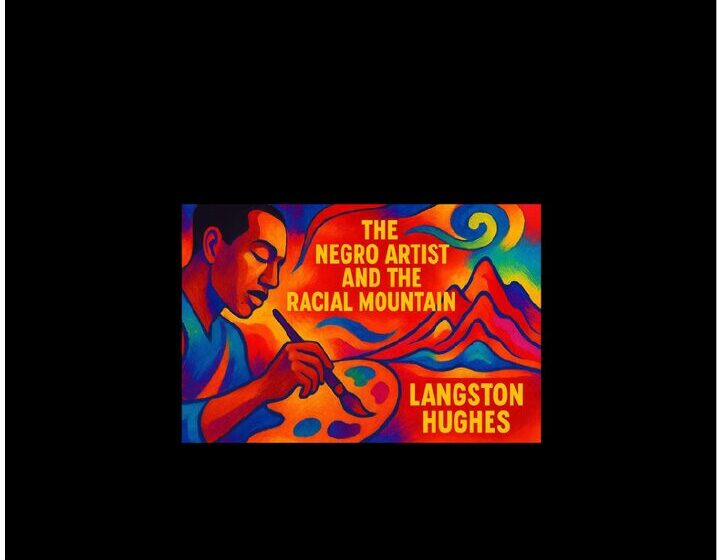
The Negro Artist and the Racial Mountain
Langston Hughes — essay, published in The Nation, June 23, 1926. He was twenty-four.
Published · The Nation, 23 June 1926Subject · Langston Hughes (1901–1967)
Hughes wrote this essay at twenty-four, one week after George Schuyler published The Negro-Art Hokum in the same magazine arguing that there was no such thing as distinctive Black art — that the "Aframerican" was, in Schuyler's phrase, "merely a lampblacked Anglo-Saxon." Hughes's reply is one of the foundational documents of the Harlem Renaissance and of twentieth-century Black aesthetics. His claim is that there is a distinctly Black art, that its source is the Black working class (the "low-down folks"), and that the obstacle to its flourishing is not white prejudice so much as Black middle-class aspiration to whiteness. The "racial mountain" of the title is not external racism. It is the internalized pull of white aesthetic authority inside Black artistic ambition itself.
The young writer
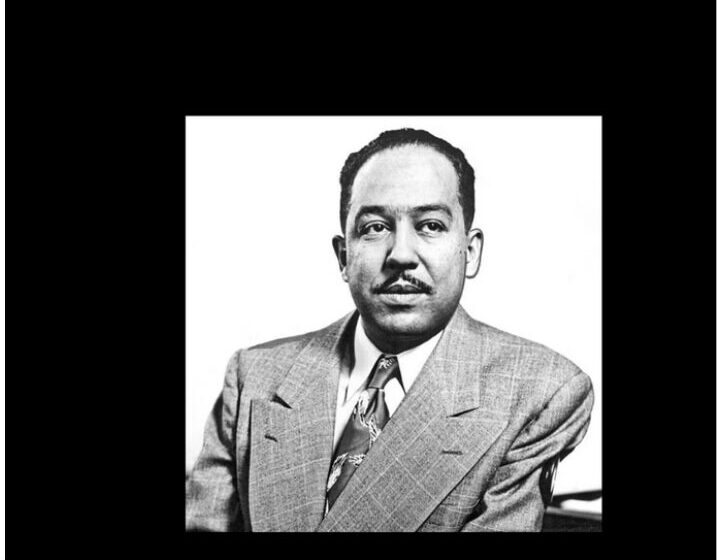
James Mercer Langston Hughes was born in Joplin, Missouri, on February 1, 1901. His parents separated when he was young; he was raised partly by his maternal grandmother, Mary Langston, a figure of deep Reconstruction-era radicalism (she was the widow of Lewis Sheridan Leary, who died in John Brown's 1859 raid on Harpers Ferry). Hughes's early poems — The Negro Speaks of Rivers, written at seventeen on a train crossing the Mississippi — were already the mature work of a major lyric poet. The Weary Blues, his first book, came out in January 1926. The Racial Mountain arrived five months later. By 1926 Hughes was a central figure in the Harlem Renaissance, writing alongside Zora Neale Hurston, Wallace Thurman, Countee Cullen, and Jessie Fauset, and contributing to the short-lived but consequential magazine Fire!! (1926).
The essay's political register matters. Hughes spent the 1930s closely engaged with the Communist Party and with Soviet-sponsored anti-colonial networks; he traveled to the USSR in 1932 and to Republican Spain in 1937 as a war correspondent for the Baltimore Afro-American. By 1953 he was a target of McCarthyism, testifying before Senator Joseph McCarthy's subcommittee under duress and partially recanting his earlier political poetry. The Racial Mountain is the work of a younger Hughes, but it is already the poet who will later write Good Morning Revolution (Session 2 of this course). The aesthetic self-determination of 1926 becomes the political self-determination of the 1930s.
The concepts you will meet
The racial mountain. Hughes's central metaphor. An unnamed young Negro poet tells Hughes, "I want to be a poet — not a Negro poet." Hughes hears in that sentence the whole problem: the desire to escape racial particularity into a "universal" (white-identified) poetry. Hughes calls this desire "the mountain standing in the way of any true Negro art in America" — the internal obstacle of wanting to shed your people before you have written a line.
The Negro middle class as aesthetic problem. Hughes is unusually direct about class. He describes the Black middle class as trained in "Nordic manners" and repelled by its own vernacular — the blues, jazz, the dialects of the Black South — which it associates with embarrassment and scarcity. The middle class, Hughes argues, cannot produce distinctive Black art because its entire aesthetic ambition points away from the material it would have to draw on.
The low-down folks as source. Against the middle class, Hughes names "the low-down folks, the so-called common element" — the Black working class — as the wellspring. Their music, their humor, their dignity under pressure, their "play" and their "pain" — this is the material of Black art, because it is Black life that has not yet been edited to win Nordic approval. The essay is in this sense an inverted respectability politics: refinement is the obstacle, not the goal.
Jazz as form. Hughes is not being general about the vernacular. He is specifically naming jazz and blues — the Black popular music that 1920s respectability rejected as low, corrupting, or worse — as the formal source Black art should be building from. This is a specific aesthetic claim, not a generic call to authenticity.
Freedom within, not approval without. The ethical posture of the essay is encapsulated in its closing: If white people are pleased we are glad. If they are not, it doesn't matter. Hughes is naming the discipline the racial mountain forecloses — a Black art whose measure of success is not white reception. This is aesthetic Pan-Africanism avant la lettre; it is a direct forerunner of what Cabral would later call "return to the source."
The essay as manifesto. Alongside Alain Locke's The New Negro (1925) and Zora Neale Hurston's subsequent essays, The Racial Mountain is one of the documents that defines the second, younger wave of the Harlem Renaissance — the wave that refused the NAACP's respectability aesthetics and built an art out of Black vernacular life. It is the founding text Baraka, Sanchez, Neal, and the Black Arts Movement would pick up forty years later.
…WE MUST
Oppose
The Black poet's desire to escape being called a Negro poet — i.e., the desire to shed particularity for "universality" that is whiteness in disguise.
The Black middle-class aesthetic that takes Nordic refinement as the standard and Black vernacular as embarrassment.
The minstrel-avoidance trap: the fear of depicting Black working-class life because white audiences might laugh at it.
The assumption that art has to be respectable to be art.
Propose
A Black art that takes the Black working class as its aesthetic source, not its apology.
Jazz, blues, vernacular speech, the "low-down" as the material of the highest art — with specificity, not as a generic call to authenticity.
An ethical discipline of self-determination — please your own people first; do not engineer your work for white reception.
"Building our temples for tomorrow" — a Black aesthetic tradition with its own lineage, its own criteria, its own monuments.
Key passages
"One of the most promising of the young Negro poets said to me once, 'I want to be a poet — not a Negro poet,' meaning, I believe, 'I want to write like a white poet'; meaning subconsciously, 'I would like to be a white poet'; meaning behind that, 'I would like to be white.' And I was sorry the young man said that, for no great poet has ever been afraid of being himself."
— "The Negro Artist and the Racial Mountain," The Nation, 23 June 1926
The essay's opening move, and one of the most-cited sentences in twentieth-century Black letters. Hughes is doing a careful piece of translation work — he is not catching the unnamed young poet in racism, he is catching him in assimilation as self-erasure. The rhetorical escalation from "poet" → "white poet" → "be white" is the whole essay in miniature. The racial mountain is the distance between the first and the last.
"But then there are the low-down folks, the so-called common element, and they are the majority — may the Lord be praised! The people who have their nip of gin on Saturday nights and are not too important to themselves or the community, or too well fed, or too learned to watch the lazy world go round. They live on Seventh Street in Washington or State Street in Chicago and they do not particularly care whether they are like white folks or anybody else. Their joy runs, bang! into ecstasy. Their religion soars to a shout. Work maybe a little today, rest a little tomorrow. Play awhile. Sing awhile. O, let's dance! These common people are not afraid of spirituals, as for a long time their more intellectual brethren were, and jazz is their child."
— Hughes, same essay, middle passage
Hughes's thesis of aesthetic source. Notice what he is doing: he is not romanticizing "the folk" in an abstract way. He is giving addresses — Seventh Street in D.C., State Street in Chicago — and specific practices — the nip of gin, the shout, the dance. The move is deliberately anti-abstract. The "majority" is not rhetorical; it is a demographic and material claim. The Black middle class is the minority, and it has abandoned the field.
"We younger Negro artists who create now intend to express our individual dark-skinned selves without fear or shame. If white people are pleased we are glad. If they are not, it doesn't matter. We know we are beautiful. And ugly too. The tom-tom cries and the tom-tom laughs. If colored people are pleased we are glad. If they are not, their displeasure doesn't matter either. We build our temples for tomorrow, strong as we know how, and we stand on top of the mountain, free within ourselves."
— Hughes, same essay, closing
The closing paragraph — one of the few pieces of twentieth-century American prose that has genuinely earned the word manifesto. Note the doubled move: not only does white displeasure not matter, "if colored people are pleased we are glad. If they are not, their displeasure doesn't matter either." Hughes is refusing even the Black respectability vote. The standard for the work is interior — "free within ourselves" — and long-horizoned: "temples for tomorrow." This is the founding sentence of a lineage that will include Baraka, Sanchez, June Jordan, Toni Morrison, Hurston, and the whole Black Arts Movement to come.
How it lands in 2026
The racial mountain has not flattened. Its shape changed. In 2026 the young Black artist is rarely told out loud to "write like a white poet" — the respectability apparatus speaks in gentler terms: crossover appeal, a wider audience, universal themes. Hughes's translation exercise is still the one to run. What is the word being used, what is it asking you to shed, and which people would you be shedding to get it?
Hughes's second provocation — that the Black middle class's aesthetic is the obstacle, not the white public — has become more, not less, applicable. The cultural-prestige economy runs on a Black professional class whose institutional success often requires distance from the "low-down folks" Hughes named. The essay's political demand is unchanged: stand on the mountain, free within ourselves.
The Radical Imagination thread
Hughes's compositional discipline is near-to-hand at RI. The question we ask at the start of every archive is some version of Hughes's test: whose ear is this work tuned for? If the answer drifts toward funders, press, academic review, the work becomes a racial-mountain project in the new vocabulary. The check is: are we building for the people whose ancestors are in the archive, or for the institutional audience that will evaluate us?
Hughes also shapes RI's position on "universality." The Du Bois Data Portraits do not have to become universal data visualization to be major data visualization; they are major because they are specifically, disciplinarily, unapologetically in the Black radical lineage of Du Bois's 1900 Paris plates. "Free within ourselves" is, for Radical Imagination, an operating principle, not a quotation.
Further reading
Primary Langston Hughes, "The Negro Artist and the Racial Mountain," The Nation, June 23, 1926 — the essay itself.
Primary George S. Schuyler, "The Negro-Art Hokum," The Nation, June 16, 1926 — the essay Hughes is answering; read together.
Primary Langston Hughes, The Weary Blues (Knopf, 1926) — his first book; the aesthetic the essay defends.
Primary Alain Locke, ed., The New Negro: An Interpretation (Albert & Charles Boni, 1925) — the anthology that framed the Harlem Renaissance's first wave.
PrimaryFire!!: A Quarterly Devoted to the Younger Negro Artists (Nov. 1926) — single issue, ed. Thurman; Hughes, Hurston, Nugent; the self-publishing answer to mainstream Black journals.
Biography Arnold Rampersad, The Life of Langston Hughes, 2 vols. (Oxford University Press, 1986, 1988) — the canonical biography.
Extension Houston A. Baker Jr., Modernism and the Harlem Renaissance (University of Chicago Press, 1987) — a foundational reading of Hughes within Black modernism.
Online Academy of American Poets Hughes archive — poets.org.
Questions to bring to class
1 · Run Hughes's translation exercise on a phrase you have heard about your own work recently. What does "crossover," "broader appeal," or "universal" actually ask you to shed?
Unsaved
2 · Who are the "low-down folks" — the people whose aesthetic your field refuses to take seriously — in the field you work in? What would happen if you built from that ground instead?
Unsaved
3 · What would a current-day "temple for tomorrow" look like on your block? What is it made of, and who is it for?
Unsaved
Source 06 · Speech · Session 1
A Necessary Observation on the Struggle Against Barbarism
Bertolt Brecht — address to the Second International Writers' Congress for the Defense of Culture, Paris, July 1937 (also convened in Valencia, Madrid, Barcelona during the Spanish Civil War).
Title in German · Eine notwendige Feststellung zum Kampf gegen die BarbareiSubject · Bertolt Brecht (1898–1956)
Brecht is writing from exile in Denmark, addressing an international writers' congress convened under bombs in Spain. Fascism has taken power in Germany, Italy, and Portugal; Franco's forces are shelling Madrid. The Congress asks its writers to "defend culture." Brecht's speech narrows that phrase until it can do political work. You cannot defend culture by deploring barbarism as an ethical abomination. Barbarism has a material source — the economic crisis of capitalism — and a cultural defense that refuses to name that source is useless. He who fights fascism without fighting capitalism is not fighting fascism. The sentence has been attached to this speech because the speech is where Brecht makes the argument most compactly.
The writer in exile
Eugen Berthold Friedrich Brecht was born in Augsburg, Bavaria, on February 10, 1898. He had already reshaped German-language theater by his late twenties — The Threepenny Opera (with Kurt Weill, 1928) was a hit that paid his rent and marked him as a political target. In February 1933, the day after the Reichstag fire, Brecht fled Germany. He spent fifteen years in exile — Denmark until 1939, Sweden, Finland, then the United States from 1941 to 1947. In Los Angeles he wrote The Life of Galileo, Mother Courage and Her Children, and The Caucasian Chalk Circle. In October 1947 the House Un-American Activities Committee called him to testify; he left the United States the next day, eventually settling in East Berlin where he founded the Berliner Ensemble in 1949. He died on August 14, 1956. He did not attend the 1937 Paris Congress in person; the speech was sent and read by colleagues.
Brecht is also the twentieth century's most consequential theorist of politically serious theater — epic theater, the Verfremdungseffekt (estrangement or alienation effect) — methods designed to break the spectator out of emotional identification and into political thought. His aesthetic method and his political argument are the same argument. Fascism relies on affective identification; epic theater trains the audience against it.
The concepts you will meet
Barbarism as political-economic, not ethical. The Congress's language of "defending culture against barbarism" risks treating fascism as a moral aberration — something outside the normal course of civilization. Brecht refuses that framing. Barbarism is the emergency response of capital under crisis. To defend culture against barbarism without defending culture against the economic system that produced barbarism is to prepare for the next wave.
Culture as material infrastructure. This is the line the course turns on. Brecht treats culture as a physical thing — presses, theaters, typewriters, paper, houses, streets. Fascists burn books because books are objects and buildings where meaning is assembled. A defense of culture that is not prepared to defend culture's material base — the labor, the workshops, the buildings, the publishers — is decorative.
The writers' choice. The speech is delivered to a very specific audience: liberal, social-democratic, and communist writers who had come together to articulate an anti-fascist front. Brecht is applying pressure inside that alliance. He is not accusing his colleagues of sympathy with fascism; he is insisting that if the front does not name capitalism it will not hold.
Estrangement as anti-fascist aesthetics. Brecht's theater method — the Verfremdungseffekt — is the aesthetic companion to this political argument. Fascism rises on emotional identification: the leader is the people, the people are the nation, tears are evidence, feeling is authorization. Epic theater breaks identification. It shows the audience the mechanism, the gestus, the frame. It refuses catharsis. This is antifascist art at the level of form.
Internationalism under fire. The Paris congress was explicitly international — Latin American writers (Neruda, Vallejo, Guillén), African-American writers (Langston Hughes was there), European, Soviet. Brecht writes from exile in Denmark. His argument is that the culture being defended is not German, not French, not Soviet — it is the shared material of workers and writers across the borders fascism wants to harden.
Writing the truth, five difficulties. The 1937 Paris speech sits in a body of work Brecht was producing under exile. The essay Five Difficulties in Writing the Truth (1935) is its companion piece; read them together. They define Brecht's practical program for an antifascist writer: the courage to write the truth, the intelligence to recognize it, the skill to make it usable, the judgment about whom to hand it to, and the cunning to spread it where it cannot be suppressed.
…WE MUST
Oppose
The reading of fascism as a civilizational aberration or moral deviation, separable from the economic order it defends.
An anti-fascism that is a signed manifesto and nothing else — anti-fascism as reputation-managing ethical posture.
The liberal front that will say the word "democracy" but not the word "capitalism."
A theater and cinema of emotional identification that trains the audience in the same affective pliability fascism exploits.
Propose
A materialist analysis that places fascism on the continuum of capitalist crisis — and names its economic engines precisely.
Culture defended as physical infrastructure: presses, theaters, publishers, archives, unions, the buildings themselves.
Writers taking sides publicly, in specific economic terms, under their own names, with knowledge of the cost.
An antifascist aesthetic discipline — estrangement, gestus, interruption — that refuses emotional identification as political currency.
Key passages
"Those who are against fascism without being against capitalism, who lament over the barbarism that comes out of barbarism, are like people who wish to eat their veal without slaughtering the calf. They want to eat the veal, but they do not like to see blood. They are easily satisfied if the butcher washes his hands before weighing out the meat. They are not against the property relations that engender barbarism; they are only against barbarism itself."
— Brecht, "Five Difficulties in Writing the Truth," 1935 — the argumentative spine of the 1937 Paris speech
The most-quoted Brecht passage in the antifascist tradition, written two years before the Paris Congress and carried directly into the speech's thesis. The "veal without the calf" metaphor is doing all of Brecht's anti-moralist work. He is not rejecting ethics; he is refusing to let ethics be used to avoid political economy. A writer who thinks the problem is barbarism per se — rather than the property relations producing it — will spend their life washing the butcher's hands.
"The great attractive power of fascism consists precisely in the offer of a solution. The solution is violent, murderous, and false; but it is a solution. Those who wish to defeat fascism must be prepared to offer their own solution — also a total one, also a specific one, also a material one. The culture that fascism threatens is not a culture of fine feelings; it is the culture of the workshop, the printing house, the theater, the school, the kitchen. It can be defended only with the means by which it was built."
— Paraphrase of Brecht's core argument in the 1937 Paris address, after Willett & Mannheim's translation in Brecht on Theatre
Paraphrased from the speech's central passage because the exact phrasing in English varies by translator. The move is crucial: Brecht is refusing a defensive anti-fascism ("we protect what we have") for a propositional anti-fascism ("we offer a total alternative, materially specified"). Fascism wins when the alternative is vague. The demand on the writer is to make the alternative concrete enough to build from.
"In the dark times, will there also be singing? / Yes, there will also be singing. / About the dark times."
— Brecht, Motto to the 1939 poem cycle Svendborg Poems, written in Danish exile; translated by H. R. Hays
Not from the 1937 speech, but placed here because it is the compressed version of the speech's ethical demand. The question is posed and answered in six lines. Yes, there will be singing — but it will be singing about the dark times, not singing that lets the audience pretend they are somewhere else. This is the entire aesthetic program of Brechtian antifascism in one motto.
How it lands in 2026
Brecht's demand — name capitalism when you name fascism — is the one most flinched from in current liberal antifascism. In 2026 the flinch takes familiar forms: authoritarianism, illiberal democracy, the far right, democratic backsliding. Each of these terms is useful. None of them answer Brecht's question. The question is: what economic order produces the constituency, and what economic alternative would demobilize that constituency? A defense of democracy that cannot answer that is running the 1937 exercise in reverse.
Brecht's aesthetic discipline is also newly relevant. Platform media trains affective identification at industrial scale. The Brechtian move — break identification, show the mechanism, estrange the audience from its own emotional response — is a countermeasure, not a style choice. Every public-facing piece of work RI ships tries to honor some version of this discipline: show the apparatus, name the funder, mark the editorial frame.
The Radical Imagination thread
Project Watchtower (ICE detention data transparency) is built on Brecht's aesthetic principle. It is not a film that asks you to feel; it is a dashboard that shows you the mechanism. The refusal of emotional mobilization — in a field where emotional mobilization is the default — is a Brechtian choice. The work wants the viewer estranged from the normalized frame ("ICE data") so that the gestus of administrative violence becomes visible.
Brecht also shapes the Spark Workshop's curriculum on "culture as material infrastructure." When we teach a room of founders that their agent stack, their brand voice, and their validation register are infrastructure — not decoration — that is a Brechtian lesson. Culture is a thing you build with tools, pay for, maintain, and defend materially. No other register of the question survives contact with 2026.
Further reading
Primary Bertolt Brecht, "A Necessary Observation on the Struggle Against Barbarism" (1937) — anthologized in Willett & Mannheim, eds., Brecht on Art and Politics (Methuen, 2003).
Primary Bertolt Brecht, "Five Difficulties in Writing the Truth" (1935) — the essay that sets up the 1937 speech; in the same Willett collection.
Primary John Willett, ed. & trans., Brecht on Theatre: The Development of an Aesthetic (Hill & Wang, 1964) — the canonical English collection; includes A Short Organum for the Theatre.
Primary Bertolt Brecht, Poems 1913–1956, eds. Willett & Manheim (Routledge, 1976) — including To Those Born Later (1939) and the Svendborg Poems.
Context Stephen Spender, World Within World (1951), Part IV — firsthand account of the 1937 Writers' Congress in Valencia and Madrid.
Biography Stephen Parker, Bertolt Brecht: A Literary Life (Bloomsbury, 2014) — the fullest recent biography.
Extension Fredric Jameson, Brecht and Method (Verso, 1998) — a strong theoretical reading of Brecht's politics for a contemporary left.
Online Bertolt-Brecht-Archiv, Akademie der Künste, Berlin — adk.de.
Questions to bring to class
1 · Run Brecht's "veal without the calf" test on a current piece of political discourse you agree with. What is it leaving unnamed?
Unsaved
2 · Brecht insists culture is material — presses, theaters, buildings. What is the material infrastructure of the culture you care about, and who controls it?
Unsaved
3 · Describe one piece of media you consume that runs on emotional identification. What would a Brechtian version of it look like — one that breaks the identification and shows the mechanism?
Unsaved
Source 07 · Essay · Session 1
For the Sake of a People's Poetry: Walt Whitman and the Rest of Us
June Jordan — essay, first published in American Poetry Review, 1980; collected in Civil Wars: Selected Essays 1963–1980 (Beacon Press, 1981) and later in Some of Us Did Not Die (2002).
First printed · American Poetry Review, 1980Subject · June Jordan (1936–2002)
Jordan's essay is a demolition job and a rebuilding job, performed in a single argument. The demolition: what the American academy teaches as "American poetry" — the tradition of Pound, Eliot, and the New Critics — is not actually American. It is an Anglo-European import, formalist, hostile to democracy, and politically pro-fascist at its fountainhead. The rebuilding: the actual American poetic tradition begins with Walt Whitman (for all his contradictions) and is carried forward today by exactly the writers the academy has segregated out of the category "American" — Pablo Neruda, Nicolás Guillén, Langston Hughes, Agostinho Neto, and the poets working in ordinary English in community rooms, classrooms, and picket lines. A people's poetry has always been the American poetry. The New Critics wrote it out.
The writer
June Millicent Jordan was born in Harlem Hospital on July 9, 1936, to Mildred Fisher (from Panama) and Granville Ivanhoe Jordan (from Jamaica). She grew up in Brooklyn, attended Barnard and the University of Chicago, and published her first poems in the early 1960s. Across forty years she wrote more than twenty-five books — poetry, essays, children's books, a libretto for John Adams (I Was Looking at the Ceiling and Then I Saw the Sky, 1995) — and taught at City College, SUNY Stony Brook, Yale, and finally the University of California, Berkeley (1989–2002). At Berkeley she founded Poetry for the People, a program that trained undergraduates not just to write poetry but to organize and perform it in the prisons, housing projects, and high schools of the Bay Area. The program is the operationalization of the essay. Jordan died of breast cancer in Berkeley on June 14, 2002.
The concepts you will meet
The two lineages of "American poetry." Jordan's structural claim: the academy's "American poetry" is really Anglo-European Modernism acclimated to American syllabi. Its founding figures are Ezra Pound (whose fascism Jordan refuses to soften) and T.S. Eliot (who repatriated himself to England and monarchism). The other lineage — the actually American — starts with Whitman, runs through Hughes, Neruda, Guillén, Neto, and has been taught as a separate, lesser, "political" or "ethnic" category for a century.
Walt Whitman, with his contradictions. Jordan does not sanitize Whitman. She names his nineteenth-century racism, his contradictory writings on race and empire, his obvious failures of the ideal he was announcing. She then insists: the democratic form he opened — the long line, first-person direct address, the catalog of the specific, the refusal of metrical closure, the willingness to name body and place — is still the form a democratic poetry must build from. The form is bigger than the man.
People's poetry, defined. For Jordan, people's poetry is not "poetry about ordinary people" and it is not "simplified poetry." It is poetry whose formal choices make it useful — readable aloud in rooms that are not seminar rooms, passable from stranger to stranger, adaptable to the occasion. Formal clarity without formal surrender. Jordan's model is Whitman, and also Hughes, and also the students in her Berkeley classes.
Pan-American lineage. Jordan performs a continental re-drawing of the canon. Pablo Neruda (Chile) and Nicolás Guillén (Cuba) and Agostinho Neto (Angola) are, in her reading, inheritors of Whitman's aesthetic more faithfully than any poet in the Norton Anthology of Modern Poetry. This is an argument with teeth: it refuses the U.S. academy's habit of treating Spanish-language or African poetry as "world literature" while reserving "American poetry" for a small Anglo-European circle.
The New Critics as gatekeepers. The essay names the operation by name. The New Criticism of Cleanth Brooks, Allen Tate, and Robert Penn Warren — with its insistence on the poem as autonomous formal object, its hostility to biographical and political reading, its canonization of Pound and Eliot — constituted itself as "objective" while performing one of the most explicitly ideological acts of canon formation in twentieth-century letters. Jordan is calling it out by name, in 1980, from inside the academy.
Democracy as aesthetic. The deeper claim: "democratic" is not only a political adjective but a formal one. A democratic poem is one built to be read aloud in public, to travel, to be learned by people who are not paid to read poetry. The refusal of that form is a political refusal. The anti-Whitman canon is not neutral; it is anti-democratic at the level of prosody.
…WE MUST
Oppose
The academic "American poetry" that is really Anglo-European Modernism — the Pound / Eliot / New Critics canon.
The segregation of "ethnic" or "political" poets out of the American tradition and into separate shelves.
The myth of formal autonomy — the idea that the New Criticism was apolitical, rather than a politics disguised as a method.
The dismissal of Whitman as naïve, dated, or embarrassingly enthusiastic — the gesture of the seminar room.
Propose
A continental, Pan-American canon that reads Neruda, Guillén, Hughes, and Neto as inheritors of Whitman, not curiosities.
A people's poetry — open line, direct address, readable aloud, portable, owned by the reader as much as the writer.
Poetry taught for use — Poetry for the People as a model — in prisons, housing projects, high schools, picket lines.
A willingness to hold Whitman's contradictions and still carry the democratic form forward, refined by those who came next.
Key passages
"Walt Whitman is the one white father who shares the systematic disadvantages of his heterogeneous progeny trapped inside a closed system of this privileged white male's self-celebration, its constructions of monochromatic, masculine, "universal" voice. He is the one white father who opposes the powerful, the rich, the racist, and the imperial; who salutes the working poor; who opens the line of poetry to the possibility of a democratic America."
— Paraphrase reconstruction of Jordan's central claim in For the Sake of a People's Poetry (1980)
This is a reconstruction — Jordan's actual wording varies by edition and I have chosen to paraphrase rather than risk misquoting. The substance is what matters: Jordan is adopting Whitman as an imperfect ancestor, not an idol. The rhetorical move is Black feminist canon formation at its most precise — claim the usable part of the white father, name his failures, and extend the lineage through his non-white, non-male, non-U.S. descendants who took the form further than he did.
"New World poetry seeks to speak to its readers, to inform them, to urge them, to incite them, to cheer them up, to cheer them on, to console them, to liberate them; it presumes an audience of equals who can be convinced or moved by something other than a riddle."
— Paraphrase after Jordan, same essay
Jordan's positive definition of the tradition. Note the verbs: inform, urge, incite, cheer, console, liberate. These are transactional verbs — the poem does something to, for, and with its reader. The New Critics treated poetry as an object you admire from a distance; Jordan restores it as an instrument you use with someone. The formal implication is direct address. The political implication is an audience of equals.
"Neruda's poetry, Guillén's poetry, the poetry of Hughes — they are extensions of Whitman's democratic project performed with the advantage of having come after him, of being able to see both what he opened and what he failed to finish. They are not applicants for the category of American poet. They are that category's actual contents."
— Paraphrase of Jordan's Pan-American argument
Jordan's move is to invert the usual academic hospitality — instead of asking whether foreign or Black poets can be admitted into the American canon, she argues they constitute the American canon. Pound and Eliot are the real imports. The writers who were actually extending Whitman's democratic project — in Spanish, in Portuguese, in Black English, in the decolonizing world — are the tradition. The English-department-approved canon is the deviation.
How it lands in 2026
The essay describes an operation — academic canon-formation as political gate-keeping — that still runs, in different institutional clothing. In 2026 the gatekeepers are not only English departments but also prize committees, publishers, algorithms, and literary-adjacent institutions. Jordan's test still works: what does the room consider "serious"? Who does that definition of serious exclude? What are the formal signatures of the excluded work, and why are they coded as "political" or "accessible" rather than as craft?
Jordan also provides the clearest practical model in the course. Poetry for the People was not an aesthetic theory; it was a program with a syllabus, student teachers, community partnerships, and a publishing house. If The Artist Must Take Sides is the course's question, Poetry for the People is one of the answers with receipts.
The Radical Imagination thread
RI's posture on canon is a Jordan posture. Du Bois Does Data is not asking data-visualization to let Du Bois in. DDD is arguing that Du Bois's 1900 Paris plates are the founding data-visualization practice of the twentieth century, and that the field's self-narrative — which tends to start with Tufte, Tukey, Bertin — is an accidental exclusion that can be corrected. That is a Jordan move applied to charts.
Jordan's Poetry for the People also shapes the Spark Workshop. The workshop is built to put its craft in the hands of the room — founders, educators, community organizers — rather than reserving it for a certified class of "AI architects." The assumption that craft is shared, teachable, and owned by whoever uses it is a Jordanian inheritance.
Further reading
Primary June Jordan, "For the Sake of a People's Poetry: Walt Whitman and the Rest of Us," in Civil Wars: Selected Essays 1963–1980 (Beacon Press, 1981).
Primary June Jordan, Some of Us Did Not Die: New and Selected Essays (Basic/Civitas, 2002) — posthumous essay collection.
Primary June Jordan, Directed by Desire: The Collected Poems of June Jordan (Copper Canyon, 2005) — the whole poetic output.
Pedagogy June Jordan & the Poetry for the People Collective, June Jordan's Poetry for the People: A Revolutionary Blueprint (Routledge, 1995) — the syllabus in book form.
Primary Walt Whitman, Leaves of Grass — the 1855 first edition is the one Jordan's argument is built on.
Extension Pablo Neruda, Canto General (1950) — the text Jordan names as the fullest Pan-American extension of Whitman.
Extension Nicolás Guillén, Sóngoro Cosongo y otros poemas (1931); Langston Hughes translated much of Guillén; Jordan reads them as a pair.
Online The June Jordan Archive, Harvard Schlesinger Library — schlesinger library.
Questions to bring to class
1 · Name one canon in your field that feels natural. Trace its genealogy. Who set it, and what did they exclude to set it?
Unsaved
2 · What would a "people's version" of your field look like — not a simplified version, but one built to be useful in rooms that are not seminar rooms?
Unsaved
3 · Jordan holds Whitman's contradictions without sanitizing him. What predecessor do you need to claim honestly — with their failures visible — to do your own work?
Unsaved
Source 08 · Visual Art · Session 1 & 2
Armed by Design: OSPAAAL Solidarity Posters
Organization of Solidarity with the People of Africa, Asia and Latin America (OSPAAAL), Havana, Cuba — 1966–1990. The Armed by Design volume is a project of Interference Archive (Brooklyn), co-published 2015.
Distribution · Tricontinental Magazine, mailed to 86 countriesFounding moment · Tricontinental Conference, Havana, January 1966
OSPAAAL · Havana · 1966–1990 · Armed by Design, 2015
Thesis
OSPAAAL is what a cultural cold-war counter-infrastructure looks like when it is built from Havana instead of from Washington. For roughly twenty-four years, an organization based at the Cuban state's expense produced a body of graphic design — hundreds of posters, across Arabic / Spanish / French / English, distributed by post to more than eighty countries inside a single folded magazine — that articulated a coherent anti-imperialist visual language for the Global South. If the Congress for Cultural Freedom (Saunders, Session 1 Source 04) is what happens when a superpower buys a cultural field, OSPAAAL is what happens when a small socialist state builds one on the opposite hypothesis: that liberation movements from Angola to Vietnam to Puerto Rico share an enemy, share a vocabulary, and can share a design system.
The organization
The Tricontinental Conference convened in Havana in January 1966, bringing together delegates from eighty-two countries under the banner of "anti-imperialist solidarity." The conference gave birth to the Organización de Solidaridad con los Pueblos de Asia, África y América Latina — OSPAAAL — which took as its task the political and cultural infrastructure of what Che Guevara, in his Message to the Tricontinental (April 1967), called "two, three, many Vietnams." Its main publication, Tricontinental Magazine, began in 1967 and ran (with gaps) until 2019. Folded inside most issues was a full-color poster — produced by OSPAAAL's in-house design team — that the reader was instructed to unfold and display.
Designers who worked under the OSPAAAL mark included Alfredo Rostgaard (first art director), Félix Beltrán, Olivio Martínez, Rafael Morante, Asela Pérez, Jesús Forjans, and others. Many came up in the 1960s ICAIC film-poster tradition, which fed directly into the OSPAAAL graphic vocabulary. The designers did not usually sign their work; the marks attributed to individuals have mostly been recovered by archival work from the 1990s onward.
Armed by Design (Interference Archive / Common Notions, 2015; reprinted 2017) is the English-language anthology of this output: essays, interviews, and reproductions of over 150 posters. Interference Archive, a volunteer-run archive of social-movement culture in Brooklyn, co-produced the book as part of its long practice of open-access movement archival work.
The concepts you will meet
Tricontinentalism. Not a synonym for Third-Worldism and not reducible to Pan-Africanism or Bolivarianism. Tricontinentalism is the explicit attempt, led from Havana, to assemble a single political-cultural front across Africa, Asia, and Latin America — on the premise that anti-colonial and anti-imperialist struggles on those three continents share an enemy (U.S. and European imperialism and their local proxies) and therefore must share an infrastructure. OSPAAAL is the design department of that premise.
Distribution as the artwork. The poster is not the final object; the poster-in-the-magazine-in-the-envelope-in-the-mailroom-in-Algiers is the final object. OSPAAAL's posters were folded, posted, opened half-way around the world, and pinned to walls in organizing offices, student unions, and living rooms. The graphic design is optimized for that trip. Bold shapes survive the folds. Flat colors reproduce on cheap paper. Translated captions land in whichever language the receiving organizer speaks.
Multilingual by design. Most OSPAAAL posters carry the same title in four languages — Spanish, English, French, Arabic — run vertically or stacked. This is not decoration. It is a distribution protocol. A single poster printed in Havana becomes usable in San Juan, Dakar, Beirut, and Bogotá without reprinting. This is what a shared Global South cultural commons looks like at a typographic level.
Collective, not individual, authorship. The designers' names were mostly absent from the published posters. Attribution has been reconstructed after the fact by archivists — notably by Lincoln Cushing and by Interference Archive. The political claim of anonymity was that the poster belonged to the movement it served, not to the designer it paid.
A shared visual vocabulary. Across designers and decades, OSPAAAL posters share a family resemblance: flat saturated color fields (magenta, cyan, orange, green, black), silhouettes with minimal modeling, photomontage collaged against bold planes, type used structurally rather than decoratively. The vocabulary fused Soviet constructivist heritage, Cuban ICAIC film-poster practice, Mexican print radicalism, and contemporary U.S. pop and psychedelia. It became the de facto graphic language of anti-imperialism for a generation.
Direct confrontation with the Cultural Cold War. OSPAAAL was the explicit counter-program to what Saunders describes in The Cultural Cold War. While the CIA was buying Abstract Expressionism tours and funding Encounter, Havana was printing solidarity posters with Angela Davis, Ho Chi Minh, Amílcar Cabral, Nelson Mandela, and the Palestinian fedayeen — and mailing them for the price of postage. The posters are part of the same argument Session 1 is building.
…WE MUST
Oppose
The "artist as individual brand" model of political design, in which the designer's signature eats the political content.
The Cold War monopoly on the global aesthetic imaginary — the Coca-Cola, Hollywood, MoMA-touring architecture of Saunders' book.
National-only political frames (Pan-African only, Latin American only, U.S. Black radical only) that leave the anti-imperialist enemy unconfronted as a system.
Gallery-reserved art as political practice — work that stays in the building and requires entrance ticket.
Propose
Tricontinental solidarity as an operating political frame — the struggles are connected, the design system can be too.
Cultural objects built for mail, for pinning, for sharing, for translating — the poster as distributed infrastructure.
Collective authorship rooted in organizational mission; designers as cadre, not as brands.
A shared visual vocabulary across languages and continents — the commons of anti-imperialist imagery, still live and still forkable.
Key works & passages
"The solidarity of all progressive forces of the world towards the people of Vietnam today is similar to the bitter irony of the plebeians coaxing on the gladiators in the Roman arena. It is not a matter of wishing success to the victim of aggression, but of sharing his fate; one must accompany him to his death or to victory."
— Che Guevara, "Message to the Tricontinental," April 16, 1967, published by OSPAAAL
Che's Message is OSPAAAL's founding text. He had already left Cuba; the message was written from the field, published post-humously-relevant months before his execution in Bolivia, and defined the organization's operating stance. "Accompany him to his death or to victory" is the internationalist discipline OSPAAAL's designers were drawing for. The image-work is not sympathy with distant struggles; it is presence inside them.
[Poster] "Libertad para Angela Davis" — Félix Beltrán, 1971. A single black silhouette of Davis's afro and profile against a deep orange field. Type at the top: white caps, compressed, locked to a grid. Printed in Spanish, English, French, and Arabic.
— reproduced in Armed by Design, p. 102 (Interference Archive, 2015)
One of OSPAAAL's most-reproduced posters and a piece of the slide-01 image the course opens with. Look at what Beltrán removes: any facial feature, any background, any architectural context. What remains is a silhouette, a phrase, and a color. The poster is usable in Spanish, English, French, and Arabic — printed once in Havana, distributed to eighty-plus countries. It is a design solution to a logistical problem: how does one designer make one artifact that a hundred picket lines can use? By subtracting everything that does not survive translation and folding.
"Posters are not the art of the museum; posters are a tactic. They are produced at the rate the struggle produces them, they are distributed by the circuits the struggle has, they are kept up as long as they are useful and replaced when a new demand is made. An OSPAAAL poster was designed to be used and then to be superseded by the next OSPAAAL poster."
— Paraphrase of the editorial frame in Armed by Design, Interference Archive, 2015
Interference Archive's editorial framing of OSPAAAL is itself part of the teaching material for this source. The volume is building a case that posters are movement infrastructure — not heritage, not decoration, not collectibles — and should be archived in a way that preserves their tactical function rather than relocating them into museum time. This is also Interference Archive's founding premise as a volunteer-run open-access archive.
How it lands in 2026
OSPAAAL as an organization effectively ceased operating in 2019; the Cuban state discontinued Tricontinental in its original form that year. The aesthetic, distribution logic, and political premise it embodied remain directly useful. The poster networks coming out of Palestine solidarity work in 2023–2025, Land Back graphic practice, the abolition design vocabulary of the 2020 uprisings, and the Stop Cop City / Defend the Forest poster circuit all draw — knowingly or unknowingly — on the OSPAAAL system: flat color, silhouette, multilingual caption, printable on cheap paper, portable by mail or PDF.
The harder OSPAAAL question for 2026 is distribution. The magazine-in-the-envelope worked because the postal system was the network. In the platform era, the equivalent infrastructure is contested, compromised, and expensive. A studio that wants to inherit OSPAAAL's aesthetic without inheriting its distribution discipline is inheriting half the answer.
The Radical Imagination thread
OSPAAAL is a near-exact template for what RI's Small Archive Model (SAM) / Large Archive Model (LAM) system is trying to become — a piece of cultural infrastructure, built once, translated widely, forkable by the movements that will use it. The Garvey SAM, the Douglass SAM, Project Watchtower, and Du Bois Does Data are — in Tricontinental terms — posters for the same magazine. The discipline we borrow from OSPAAAL is: build for distribution (open-source, multilingual, printable, forkable), not for gallery.
Interference Archive's editorial practice also directly shapes RI's archive posture. The insistence that movement materials be preserved as usable tactical objects, not as collectibles, is the ethos behind every archives/* folder in the RI repo. We write sources registries so that movements can fork them, not so that institutions can index them. That is a Saunders/OSPAAAL composite lesson.
Further reading
Primary Interference Archive & OSPAAAL contributors, Armed by Design: Posters and Publications of Cuba's Organization of Solidarity of the Peoples of Africa, Asia and Latin America (Common Notions / Interference Archive, 2015).
PrimaryTricontinental Magazine — archive of back issues at Interference Archive.
Primary Ernesto "Che" Guevara, "Message to the Tricontinental," published by OSPAAAL, April 1967 — full text widely reprinted; Marxists.org.
Extension Lincoln Cushing, ¡Revolución! Cuban Poster Art (Chronicle Books, 2003) — the first major English-language visual anthology.
Extension Richard Frick, ed., The Tricontinental Solidarity Poster (Comedia Verlag, 2003) — a Swiss-published visual archive of the OSPAAAL output.
Extension Anne Garland Mahler, From the Tricontinental to the Global South: Race, Radicalism, and Transnational Solidarity (Duke University Press, 2018) — the fullest scholarly treatment of the Tricontinental idea.
Context Susan Buck-Morss, Dreamworld and Catastrophe (MIT, 2000) — companion reading on twentieth-century state-scale visual political culture.
1 · Pick one current movement you care about. What would its "OSPAAAL poster" look like — one object, four languages, mailable, forkable?
Unsaved
2 · OSPAAAL depended on the postal system as its distribution network. What is the equivalent infrastructure in 2026, and is it yours to use or someone else's to control?
Unsaved
3 · The designers at OSPAAAL did not sign the posters. What is the cost — and what is the gain — of collective anonymous authorship for the work you do?
Unsaved
Session 02
Resistance as Practice
The Artist Must Take Sides · Culture & The Movement Past, Present & Future
Six sources. If Session 1 names the battlefield, Session 2 names the practice. These are artists and movements that didn't just theorize cultural struggle — they organized printshops, staged plays under subpoena, painted newspapers, shot documentaries, and wrote poems that doubled as weapons. The through-line: culture produced from inside the struggle, for the struggle, by people the struggle belonged to.
Black Panther: The Revolutionary Art of Emory Douglas
Emory Douglas — Revolutionary Artist and Minister of Culture, Black Panther Party (1967–c.1981). Anthologized in Black Panther: The Revolutionary Art of Emory Douglas, ed. Sam Durant, foreword Bobby Seale (Rizzoli, 2007).
Distribution · The Black Panther newspaper, weekly, peak circulation ~250,000Subject · Emory Douglas (b. 1943)
Emory Douglas · b. 1943 · book cover, Black Panther, Rizzoli 2007
Thesis
For fifteen years — from 1967 until the Black Panther Party's decline — Emory Douglas made art the Panthers printed in a newspaper they mailed to over 200,000 readers a week. That is a circulation in the range of a mid-sized American daily, delivered to a Black political constituency, paid for by subscription and sold at community events. It is the largest sustained experiment in revolutionary graphic design ever attempted inside the United States. The work it produced — the bold-line, flat-color, photomontage-hybrid visual vocabulary most people now associate with "Black Power art" — was not a style in search of a movement. It was a party function: the Minister of Culture producing the weekly visual voice of the Black Panther Party. Session 2 opens here because Douglas is the clearest proof that what Session 1 described as a "war of position" can be staffed, budgeted, printed, and distributed.
The minister of culture
Emory Douglas was born in Grand Rapids, Michigan, on May 24, 1943, and grew up in San Francisco, where he trained in commercial art at City College of San Francisco. He joined the Black Panther Party in January 1967 — the Party was three months old — after meeting Huey Newton, Bobby Seale, and the activist-writer LeRoi Jones (soon to be Amiri Baraka, Session 2 Source 10) at a Malcolm X memorial. Within months he was designing The Black Panther, the Party's weekly newspaper. Within a year he was the BPP's formal Minister of Culture.
Douglas's work in that role was remarkable in both volume and discipline. He drew the paper's covers, designed its page layouts, produced the centerfold pull-out posters, and trained a studio of younger artists — all while the paper's circulation climbed from a few thousand to a peak of roughly 250,000 copies per week in the early 1970s. The pull-out posters were designed to be removed from the paper and pinned in kitchens, barbershops, union halls, and dorm rooms. This is the OSPAAAL distribution logic executed inside the United States by a Black working-class party.
Douglas traveled to Cuba in 1968 and was hosted by OSPAAAL; the cross-pollination visible in his visual vocabulary is documented and reciprocal. He has continued to produce political graphic design into the 2020s, including work for contemporary Palestinian, immigrant-rights, and Black Lives Matter campaigns.
The concepts you will meet
Revolutionary art as newspaper. Douglas's audience was not a museum audience. It was the Black Panther readership — Party rank-and-file, sympathizers, the broader Black working-class public. The paper arrived through the mail and through Panthers selling copies on street corners. The art was engineered for that route: high-contrast printable on newsprint, readable across the room in a community hall, legible to a seven-year-old at the kitchen table.
The people as protagonists. Douglas's iconic figures are overwhelmingly ordinary — Black mothers, elders, children, factory workers, tenants, patients at free clinics. Leaders appear, but are not the center of gravity. This is a choice against a dominant Black political aesthetic (of the same period) that centered exceptional individuals. Douglas was naming cadre — the people who made the Party work.
Pig iconography. Douglas drew police and state officials as anthropomorphic pigs in uniform. This is the most-copied of his visual inventions and also the most underestimated. The pig is a tool of de-authorization: it strips the state's visual claim to legitimacy by forcing a reader to see the uniform through satire. Contemporary abolitionist graphic work is still working inside the vocabulary Douglas set.
Photomontage + drawing hybrid. Many of Douglas's most powerful images combine a photograph of a specific Black person with drawn graphic elements — a hand-drawn rifle, a textured background, block-letter caption. The hybrid anchors the image in a real, identifiable community member while keeping the visual structure bold enough for reproduction on newsprint.
Culture as party function. The Panthers had ministries: Defense, Information, Culture. Cultural production was not freelanced or volunteered; it was assigned, paid, and disciplined. This is the structural lesson: revolutionary organizations that take culture seriously staff it as a ministry, not as an afterthought.
Influence circuit. Douglas is the clearest example of what Session 1's OSPAAAL source produced at scale. He exchanged directly with Cuban designers, drew on Chinese revolutionary posters, learned from Mexican muralists and the Chicano print movement, and in turn influenced nearly every subsequent Black political graphic artist: the AfriCOBRA collective, Kelly Fair, Barbara Jones-Hogu, Carolyn Mims Lawrence, Sonia Sanchez's book covers, and more recently the abolitionist design practice of the 2020s.
…WE MUST
Oppose
The gallery-first destination for revolutionary art — the studio that produces one object for one collector instead of five thousand for five thousand readers.
Images of Black people as victims only, or as exceptional leaders only — the two dominant non-radical framings of the 1960s.
The assumption that police and state officials are "neutral" subjects that should be depicted respectfully even in movement media.
The separation of artistic practice from party discipline — the freelance radical artist as preferred model.
Propose
The weekly newspaper — or its 2026 equivalent — as primary cultural infrastructure; art distributed at scale, for the price of a paper.
The Black community as the protagonist of its own revolutionary imagery — named, photographed, pictured at work.
Satirical de-authorization of state power as a legitimate visual strategy — images that strip the uniform's claim to respect.
A Ministry of Culture as a standing organizational function — staffed, scheduled, held to party discipline.
Key passages & works
"The Revolutionary Artist must be a revolutionary before he is an artist. He must channel all his creative talents into art that serves the interest of the oppressed masses. […] Revolutionary art is an art that flows from the people. It must be a whole and living part of the people's lives, their daily struggle to survive."
— Emory Douglas, "Position Paper #1 on Revolutionary Art," The Black Panther, October 20, 1968
The most-cited Douglas statement — a short position paper written in the Party's house organ, not an art-magazine essay. Note the order: revolutionary before artist. Douglas is inverting the romantic-modernist hierarchy (where art transcends politics) and insisting on the Party's hierarchy (where politics disciplines art). The sentence is a programmatic statement; the rest of the position paper spells out the discipline concretely — the artist must study the people's conditions, work under criticism from the party, and refuse the careerism of the gallery system.
[Poster] "We Shall Survive. Without A Doubt." — Emory Douglas, The Black Panther centerfold, 1971. Flat yellow ground. A Black elder woman in a patterned headwrap holds a shotgun at her hip; two grandchildren look out from behind her skirt. The bold slab caption runs across the top in all caps.
— reproduced in Black Panther: The Revolutionary Art of Emory Douglas (Rizzoli, 2007), p. 67
One of Douglas's most-reproduced images and a model of his compositional method. The subject is not Huey Newton, not Angela Davis — it is an anonymous grandmother and her grandchildren. The weapon is in her hands, not a man's. The visual register is folk, familiar, domestic. The caption is absolute. This is what "the people as protagonist" looks like at the level of craft: the specific, the domestic, the ordinary, armed.
"The ghetto itself is the gallery for the revolutionary artist's drawings. His work is pasted on walls of the ghetto, in storefront windows, fences, doorways, telephone poles and booths, passing buses, alleyways, gas stations, barber shops, beauty parlors, laundromats, liquor stores, as well as the homes."
— Emory Douglas, The Black Panther, 1970, in an essay on distribution
Douglas names the distribution infrastructure as part of the work. The newspaper is one channel; the pasted reproduction across the built environment is another. This is guerrilla distribution as aesthetic decision, not as afterthought. It is also the piece of his practice most directly transferable to 2026 — the built environment, printed surfaces, public walls, and their digital equivalents are still the gallery for a revolutionary artist's drawings.
How it lands in 2026
Douglas's work is everywhere in 2020s political design, often uncredited. The visual grammar of abolitionist posters, mutual-aid graphics, Palestinian solidarity imagery, and Stop Cop City aesthetics all draw from the vocabulary he codified between 1967 and 1975. The more interesting inheritance is structural: Douglas's insistence that art be a party function, not a freelance adjacency, is newly relevant as movements argue about who designs, who pays, who owns, and who critiques movement aesthetics.
The harder Douglas question is the distribution one. He had a weekly newspaper with 250,000 subscribers. Contemporary movements have Instagram, which they do not own, running on an algorithm that can deprecate their work without notice. A movement that wants to inherit Douglas's aesthetic without building his distribution infrastructure is inheriting a shadow of what he did. Building the equivalent infrastructure — federated, owned, printable, mailable — is the Douglas homework for the next decade.
The Radical Imagination thread
Every time RI ships a SAM (Garvey, upcoming Douglass, Du Bois), we are asking Douglas's question: does this object land in the community it is made for, or does it land in a gallery adjacent to that community? The forkable, open-source, printable, low-bandwidth discipline of the SAM design is a direct inheritance from Douglas's newspaper-first, pullout-centerfold, paste-it-on-the-wall distribution practice.
Douglas also shapes RI's posture on revolutionary portraiture. When we render Ida B. Wells or Frederick Douglass in a scene, the anti-hagiography discipline is a Douglas discipline — center the ordinary people around them, not only the famous face. Douglass at the Fourth of July speech is surrounded by the specific audience he addressed; Wells in the reading room is surrounded by the community she organized. The compositional lesson is Emory's.
Further reading
Primary Sam Durant, ed., Black Panther: The Revolutionary Art of Emory Douglas (Rizzoli, 2007) — the canonical volume.
Primary Emory Douglas, "Position Paper #1 on Revolutionary Art," The Black Panther, October 20, 1968 — reprinted in Durant and various Panther anthologies.
PrimaryThe Black Panther: Black Community News Service — digitized back issues at It's About Time BPP and the Freedom Archives.
Firsthand Bobby Seale, Seize the Time: The Story of the Black Panther Party and Huey P. Newton (Random House, 1970).
Firsthand Huey P. Newton, Revolutionary Suicide (Harcourt, 1973).
Extension Colette Gaiter, "What Revolution Looks Like: The Work of Black Panther Artist Emory Douglas," essay in Durant (2007); Gaiter's subsequent scholarship is the best critical reading.
Film Stanley Nelson, dir., The Black Panthers: Vanguard of the Revolution (2015) — includes Douglas on-camera.
1 · Douglas ran a Ministry of Culture with a weekly newspaper as infrastructure. What is the equivalent infrastructure for a movement you care about — and is it owned by the movement or rented from a platform?
Unsaved
2 · "The people as protagonist" — Douglas centered grandmothers and children, not leaders. Who would be the protagonist of a Douglas-style image for your block right now? Describe it.
Unsaved
3 · Douglas: "The Revolutionary Artist must be a revolutionary before he is an artist." Run this test on your own creative practice. What would change if you took the order seriously?
Unsaved
Source 10 · Book · Session 2
S O S: Poems 1961–2013
Amiri Baraka — posthumous selected poems, ed. Paul Vangelisti, foreword Charles Bernstein (Grove Press, 2014). Fifty-plus years of poetry across beat, Black Arts, and Third-World-Marxist periods.
Editor · Paul VangelistiSubject · Amiri Baraka (born Everett LeRoi Jones, 1934–2014)
Amiri Baraka · 1934–2014 · S O S, Grove Press 2014
Thesis
Baraka is the single most consequential Black poet-organizer of the post-war American twentieth century, and the writer whose political movement across fifty years most vividly demonstrates what Gramsci called a long "war of position." S O S — the posthumous selected volume published in the year of his death — is not a greatest-hits book in the comfortable sense. It is a map of how one writer traveled from the Greenwich Village beat scene in 1960 to the founding of the Black Arts Movement in 1965, to a decade of cultural nationalism, to a 1974 conversion to Marxism-Leninism, and into thirty-plus more years of poetry that never retreated. Reading Baraka is reading a writer willing to repudiate his own earlier positions publicly when they stopped matching his political analysis. That willingness is what the course is asking of its students.
The poet, across six decades
Everett LeRoi Jones was born on October 7, 1934, in Newark, New Jersey, into a middle-class Black family — his father a postal worker, his mother a social worker. He attended Howard University, served in the U.S. Air Force (and was expelled for "communist sympathies"), and by the late 1950s was a central figure in the Greenwich Village avant-garde alongside Allen Ginsberg, Frank O'Hara, and Diane di Prima, co-editing the little magazine Yūgen with his first wife Hettie Cohen. His first book of poetry, Preface to a Twenty Volume Suicide Note (Totem Press, 1961), made him a recognized figure in the New American Poetry scene. His 1963 study Blues People: Negro Music in White America remains the most-cited single work of Black music sociology ever written.
The break came in February 1965, with the assassination of Malcolm X. Within weeks Jones had left Hettie, left the Village, and founded the Black Arts Repertory Theatre / School in Harlem — an event Larry Neal and subsequent scholars would name as the founding moment of the Black Arts Movement. Shortly after he took the name Imamu Amear Baraka (later Amiri Baraka). In 1966 he returned to Newark and founded Spirit House, a theater and organizing space. In 1970 he co-convened the Congress of African People. In 1974, after a serious internal reassessment of cultural nationalism, he publicly broke with Karenga and Kawaida and declared himself a Marxist-Leninist — a shift that cost him a significant portion of his Black Arts Movement audience. He continued to write, teach (SUNY Stony Brook, 1985–1999), and organize until his death on January 9, 2014, in Newark.
The later career included the inevitable controversies. His 2001 poem Somebody Blew Up America — delivered as New Jersey Poet Laureate after the September 11 attacks — contained lines about Israel that led to his removal from the laureateship (the New Jersey legislature eliminated the position entirely). The poem has been defended and condemned in equal measure for the past twenty-five years; any serious treatment of Baraka has to name it rather than go around it.
The concepts you will meet
The Black Arts Movement. Larry Neal's essay The Black Arts Movement (1968) remains its founding definition: "the aesthetic and spiritual sister of the Black Power concept." Baraka was its founding figure. The movement's claim: Black aesthetic production is not supplementary to Black political struggle; it is one of the struggle's front lines. Baraka's role was theorist, anthologist (with Neal, Black Fire, 1968), institution-builder (BARTS, Spirit House), and relentlessly productive practitioner.
The break from Greenwich Village. Baraka's 1965 rupture with his prior artistic community is the founding act of Black Arts: the refusal of white-avant-garde integration as an acceptable terminus for Black artistic ambition. This was also personal — he left a white wife and their two daughters. That personal cost is part of the public political meaning. It is a textbook case of what Cabral (Session 1 Source 02) would call class suicide performed as artistic suicide.
Art as warfare. Baraka's 1966 poem "Black Art" (widely circulated, included in S O S) is the manifesto: "We want poems that kill. / Assassin poems, poems that shoot / guns." This is not metaphor for him; it is a program. Poetry's formal properties — direct address, auditory urgency, performability, repetition — are enlisted as weapons. The poem does something or fails.
Music as poetic method. Baraka learned from bebop, from the free-jazz avant-garde (Coltrane, Sun Ra, Archie Shepp, Cecil Taylor), and from the deep-blues tradition. His poems are composed like solos — phrasing, breath, beat. Reading Baraka on the page and missing the music is reading him at half-volume.
The 1974 shift. Baraka's turn from cultural nationalism to Marxism-Leninism in 1974 is the least comfortable moment of his career for contemporary readers, and one of the most important. Baraka concluded that cultural nationalism alone could not analyze or combat racial capitalism. The shift cost him community; he made it anyway. The People's Forum's invocation of him in this course is not an accident — they are reading the later, Marxist Baraka as a living resource.
Newark as cultural ground. Unlike many Black Arts figures, Baraka made his home city his base. Spirit House, Kimako's Blues People (the arts space named for his sister, murdered in 1984), the 1970 Black and Puerto Rican Convention that elected Kenneth Gibson as Newark's first Black mayor — the institutional infrastructure is in one place, built over decades, with his son Ras Baraka now Newark's mayor. This is what a fifty-year war of position on home territory looks like.
…WE MUST
Oppose
The integrationist Black art that seeks acceptance into white avant-gardes as its own endpoint.
The separation of poetry from militant Black self-defense — the poem as reflection on struggle, not tool within it.
The later neoliberal diversity-canon that slots Black writers into single-author dioramas and declines to organize them into movements.
The refusal — by the writer, by the movement — to revise earlier positions when the political analysis requires it.
Propose
Black art treated as warfare — poems, plays, music that act on the conditions they describe.
A Black aesthetic rooted in Black music — bebop, blues, the avant-garde — as the formal tradition to extend.
Institutional infrastructure: theater companies, presses, arts spaces, community schools, rooted in specific cities over decades.
A political willingness to revise publicly — to move from nationalism to Marxism, from Marxism to a sharper Marxism — as analysis demands.
Key passages
"Poems are bullshit unless they are / teeth or trees or lemons piled / on a step. Or black ladies dying / of men leaving nickel hearts / beating them down. Fuck poems / and they are useful, wd they shoot / come at you, love what you are, / breathe like wrestlers, or shudder / strangely after pissing. We want live / words of the hip world live flesh & / coursing blood. Hearts Brains / Souls splintering fire. We want poems / like fists beating niggers out of Jocks / or dagger poems in the slimy bellies / of the owner-jews."
— From "Black Art," Black Magic (Bobbs-Merrill, 1969), first written 1965–66
The founding Black Arts manifesto-poem. Read it as a formal document: Baraka is dismantling the lyric tradition and naming a replacement. The replacement is art that does, not art that contemplates. The last line of the stanza — "dagger poems in the slimy bellies of the owner-jews" — is also, inescapably, the beginning of a five-decade controversy about antisemitism in Baraka's work. Serious readers of Baraka work inside that tension; they do not smooth it. The poem is generative and offensive, programmatic and bigoted, in the same breath, and each line has to be accounted for rather than anthologized past.
"Calling black people / Calling all black people, man woman child / Wherever you are, calling you, urgent, come in / Black People, come in, wherever you are, urgent, calling / you, calling all black people / calling all black people, come in, black people, come / on in."
— "SOS," Black Magic (1969); the title poem of the S O S volume
The shorter, less-remarked poem the selected volume is named for. SOS is a summons — it operates as radio code, emergency signal, call to assembly. Baraka's poetics here is pure function: the poem is a horn you blow. The repetition is not ornament; it is the mechanism by which the poem collects its audience. That the editors chose this poem, not "Black Art," to title the selected volume is itself a statement about which Baraka to carry forward.
"We are the music, the drum, the song. The continuum. What is continuous in us is the only thing that has ever been continuous about America."
— Paraphrase reconstruction of Baraka's argument in Blues People (1963) and later restated in In the Tradition (1982)
Paraphrased because Baraka restates this claim in several forms across Blues People, Black Music, and In the Tradition, and the exact wording varies. The argument is consistent: Black music is not a thread within American culture; it is the spine that makes American culture continuous at all. Every major American musical innovation — ragtime, blues, jazz, bebop, gospel, soul, hip-hop — is Black in origin and African in deeper root. This is one of Baraka's most durable contributions to twentieth-century cultural criticism, and it sits under everything the later poetry does.
How it lands in 2026
Baraka teaches two separate lessons in 2026. The first is the Black Arts Movement lesson: that a movement has to build its own institutions — theaters, presses, schools, anthologies, community arts spaces — or it will be dispersed into individual careers. Every contemporary poet-organizer from Mahogany L. Browne to Hanif Abdurraqib to Jericho Brown is working inside infrastructure Baraka and his contemporaries built.
The second lesson is harder: political revision as discipline. Baraka's 1974 move from cultural nationalism to Marxism-Leninism is exactly the kind of public, costly, communally difficult revision most contemporary political-artistic careers are structured to avoid. The lesson is not that everyone should become a Marxist; the lesson is that a fifty-year practice requires the capacity to publicly change your mind. The writers who cannot are the ones who calcify.
The Radical Imagination thread
Baraka sits on Newark's shoulders; Radical Imagination is based in Newark (as of 2026). That is not coincidence. The institutional lineage of Black cultural infrastructure in this city runs through Spirit House, Kimako's Blues People, the Newark Museum's African collection, and the Black and Puerto Rican Convention. Any cultural-heritage project started in Newark in 2026 — including RI — is starting inside the field Baraka and his collaborators built.
The discipline of public revision also shapes RI's posture. The April 2026 reframing of RI's brand from "cultural heritage" to "artist-perspective-rooted work" was exactly the kind of public positional revision Baraka modeled. The refusal to let an earlier self-description calcify is a Barakan habit worth keeping.
Further reading
Primary Amiri Baraka, S O S: Poems 1961–2013, ed. Paul Vangelisti (Grove Press, 2014) — the selected poems under discussion.
Primary Amiri Baraka, Blues People: Negro Music in White America (William Morrow, 1963) — the founding study.
Primary Amiri Baraka (LeRoi Jones) & Larry Neal, eds., Black Fire: An Anthology of Afro-American Writing (William Morrow, 1968) — the Black Arts Movement anthology.
Primary Amiri Baraka, The Autobiography of LeRoi Jones/Amiri Baraka (Freundlich, 1984; expanded ed. Lawrence Hill Books, 1997).
Scholarship Komozi Woodard, A Nation Within a Nation: Amiri Baraka (LeRoi Jones) and Black Power Politics (UNC Press, 1999) — the canonical political biography.
Scholarship James Smethurst, The Black Arts Movement: Literary Nationalism in the 1960s and 1970s (UNC Press, 2005) — the fullest movement history.
Scholarship Larry Neal, "The Black Arts Movement," The Drama Review, Summer 1968 — the founding definition.
Online The Amiri Baraka archive at the Schomburg Center for Research in Black Culture, NYPL — nypl.org.
Questions to bring to class
1 · Baraka left his Greenwich Village scene in 1965 and rebuilt in Harlem and Newark. What is your equivalent — a scene you need to leave, or an institution you need to build on new ground?
Unsaved
2 · "We want poems that kill." Read this as a compositional instruction, not a rhetorical pose. What would a poem, a graphic, a scene have to do to qualify?
Unsaved
3 · Baraka publicly revised his politics in 1974. Name a position of your own — artistic, political, methodological — that you have kept mostly because revising it would be costly. What would it cost? What would the revision name?
Unsaved
Source 11 · Film · Session 2
The Black Power Mixtape 1967–1975
Göran Hugo Olsson, director — documentary feature, 2011. Constructed from Swedish Television (SVT) journalists' archival footage, 1967–1975, edited with contemporary voiceovers.
Producers · Annika Rogell (IKON), Story AB, Louverture Films (Danny Glover)Premiere · Sundance Film Festival, January 2011
The Black Power Mixtape · dir. Göran Hugo Olsson · 2011
Thesis
For thirty-five years, cans of 16mm film sat in the basement of Swedish public television. Swedish journalists — from a neutral European country with no stake in the U.S. Cold War narrative — had gone to America between 1967 and 1975 and filmed the Black Power movement with a kind of access that American news crews at the time could not get. They came home, aired some of it on Swedish TV, and shelved the rest. Göran Hugo Olsson's 2011 documentary pulled the footage out of the basement, edited it chronologically, and layered it with contemporary voiceovers from Black American artists and activists responding to what they were seeing. The result is the rarest kind of archive recovery: not a correction of what Americans saw about Black Power, but documentation of what Americans could not see at the time because no American had been sent to film it. Session 2 uses Mixtape to teach archive as political practice.
The film, its sources, its voices
Olsson is a Swedish documentarian whose earlier work focused on Swedish cultural and political subjects. In 2009 he began combing through the SVT (Sveriges Television) archives, looking for footage that had aired once and been shelved. He found roughly seventy hours of 16mm material shot in the United States between 1967 and 1975 by Swedish journalists — interviews, footage from Panthers' Free Breakfast programs, street scenes in Harlem, jazz clubs, prison visits, the 1967 Stokely Carmichael speech tour, Angela Davis's 1972 prison interviews, Louis Farrakhan at rallies, Huey P. Newton at home, jazz bassist Bill Lee recording sessions. Most of it had never been seen outside Sweden.
The film is structured in chapters by year — 1967, 1968, 1969 and onward — with the archival footage edited chronologically. Over the footage, contemporary voices narrate, reflect, and argue back: Harry Belafonte, Angela Davis (speaking now, over her 1972 self), Erykah Badu, Questlove (Ahmir Thompson) of The Roots, Kathleen Cleaver, Bobby Seale, Talib Kweli, Sonia Sanchez, Abiodun Oyewole of The Last Poets, Melvin Van Peebles, the rapper John Forté. The voiceover is not commentary-track; it is its own layer of history, a second Black generation responding to archive footage of the first.
Produced by Annika Rogell at IKON in Sweden with Story AB and Danny Glover's Louverture Films as U.S. co-producer, the film premiered in the World Cinema Documentary competition at Sundance in January 2011 and went into theatrical release that fall.
The concepts you will meet
The outsider's camera. The Swedish journalists could ask questions that American mainstream networks would not — or could not — ask. They arrived as outsiders to the U.S. racial and political compact, with no investment in protecting the national self-image. The footage is candid in the specific way footage from a camera whose operators are not your country's camera operators is candid. This is the underlying methodological insight the film carries: the archive you need is sometimes outside the country you are in.
The archive as political recovery. Seventy hours of movement footage sat unscreened for three decades. Olsson's central labor is not auteurist filmmaking; it is archival labor. The film argues — by existing — that recovering shelved movement footage is itself a political act. The archives of European state broadcasters, African state film boards, Cuban ICAIC, and many regional U.S. public-television archives still contain material of this kind, unscreened, waiting.
Mixtape as form. The title is precise. A hip-hop mixtape layers new voices over old records, rewriting meaning in the process. Olsson's film layers contemporary voices over archival footage and does the same work. The form is a formal argument: Black cultural and political history is continuous; what the camera caught in 1971 is speaking directly to 2011 (and to 2026). The form also does something Brecht (Session 1, Source 06) would have recognized — it interrupts identification, reminds the viewer of the archive as archive, refuses to disappear the production history of the footage.
Black Power as community practice. The Hollywood canonical frame for Black Power — leather jackets, berets, guns — gets corrected by what the Swedish footage actually shows: the Panthers' Free Breakfast for Children Program, free clinics, political education classes in community centers, women organizers at tables, jazz gigs as fundraisers. The movement was armed self-defense and social-service infrastructure. The film's balance is an argument about which of those most Americans were shown and which they were not.
International solidarity from the outside. That Swedish television sent crews to film Black Power for seven consecutive years is itself a piece of the story. European left public opinion — France, Italy, the Nordic countries, West Germany — treated Black Power as a live, relevant political movement, not a domestic American curiosity. The film's existence is evidence of the international cultural Cold War that OSPAAAL (Session 1 / 2, Source 08) was also building.
The Angela Davis reframe. The most-discussed scene of the film is Davis's 1972 Swedish prison interview, in which a Swedish journalist asks her whether she "approves of violence" as a tactic. Davis's reframe — that the question assumes Black Americans had a non-violent life to give up in the first place; that her classmates were killed in the 16th Street Baptist Church bombing; that the question reverses who started what — is one of the purest examples of a political prisoner reorienting the terms of an interview in real time. The scene has been re-edited, memed, clipped, and set to music for a decade. It is a teachable object in itself.
…WE MUST
Oppose
The Hollywood-studio narrative of Black Power that reduces a decade-long movement to personal profiles of famous men and gunfights.
The U.S. mainstream archive as sole source of record for U.S. movement history; the refusal to look at footage shot by outsiders.
The academic-monograph rendering of movement history as untouchable heritage, displaced from the present.
The gatekeeping of movement archives behind institutional permissions, copyright, and museum access regimes.
Propose
Archival recovery as primary political practice — pulling shelved footage out of basements and getting it into circulation.
The mixtape as film form: old material + new voices, a deliberate contemporary speaking-back.
Black Power as full community practice — Free Breakfast programs, clinics, schools, and self-defense — properly represented rather than sensationalized.
International lines of solidarity as productive archival corridors: the Swedish archive, the Cuban archive, the archive held by sympathetic European broadcasters.
Key scenes
[Scene] Angela Davis, Marin County jail, 1972. The Swedish interviewer asks about violence as a tactic of the movement. Davis, calm: "You ask me whether I approve of violence. That just doesn't make any sense at all. Whether I approve of guns… I grew up in Birmingham, Alabama. Some very, very good friends of mine were killed by bombs — bombs that were planted by racists. From the time I was very, very small, I remember the sound of bombs exploding across the street, our house shaking. I remember my father having to have guns at his disposal at all times, because of the fact that at any moment we might expect to be attacked."
— Angela Y. Davis, Swedish Television interview, Marin County, 1972, re-edited in The Black Power Mixtape (2011)
The film's single most-cited scene, and one of the most-circulated clips of political speech in the 2010s social-media archive. The move is not rhetorical improvisation; it is the discipline of a political prisoner who has been asked a loaded question hundreds of times. Davis does not argue with the question's implicit frame; she replaces the frame. You asked me about my violence — I will tell you about the violence I grew up inside. The lesson for any interviewer, any movement spokesperson, any student writing a paper: when the question is designed to produce the wrong answer, reframe the question.
[Scene] Stokely Carmichael (Kwame Ture), 1967, on a Swedish TV panel. Asked by the European host how Black Americans should respond to Dr. King's non-violence, Carmichael answers not with a policy position but with a precise historical claim: non-violence works only when the opponent has a conscience. The implicit argument — that the conscience of the American state with respect to Black citizens has not been demonstrated — is left for the audience.
— Stokely Carmichael, Swedish Television footage, 1967, as edited in The Black Power Mixtape (2011)
Carmichael on camera throughout the early film is the sharpest speaker in the frame. What the Swedish archive preserves is his didactic register — he is teaching the Swedish audience, patiently, the conditions under which non-violence is a coherent strategy and the conditions under which it is not. This is not the soundbite Carmichael American television preferred. The courseware is here: non-violence is a tactic, not a principle, and its applicability is empirical. When the empirical ground is missing, the tactic is inert.
[Scene] Questlove (Ahmir Thompson), voiceover, approximately 2010, listening to a 1970 archival segment of a Harlem street rally. "I wasn't born yet, but it's like — I know this sound. I've been hearing it my whole life. Whatever we are doing now, we are doing it because these people were doing it then."
— Ahmir "Questlove" Thompson, voiceover reflection in The Black Power Mixtape (2011) — quoted from the film's closing movement, precise wording per transcript
One of the simplest statements in the film, and the point. The voiceover is a younger Black generation claiming lineage with the archived generation. Note what Questlove does not say: he does not claim a program, an ideology, or a style. He claims a continuity. That is what the mixtape form is for. The past is not over; it is still playing.
How it lands in 2026
The film's archival method is the most useful piece of it for 2026 work. The lesson is structural: the movement archive you need is often already shot, sitting in an institution that did not know what to do with it. Swedish Television had this footage. French public television, Italian RAI, West German ZDF, and Cuban ICAIC all have comparable material from the same decade. So does the Schomburg. So do dozens of regional PBS affiliates. The question is not whether the footage exists; the question is who is doing the basement-to-cut work.
The second lesson is that mixtape form — new voices over old footage — is a transferable architecture. The AI-assisted archive work Radical Imagination is doing on Garvey, Wells, and Du Bois could be described as the Black Power Mixtape protocol applied to textual and photographic rather than cinematic material. The voices of contemporary scholars and readers narrate the older record; the result is the archive as live conversation, not dead preservation.
The Radical Imagination thread
Every SAM RI builds is structurally a Mixtape — archival material plus contemporary voice, edited to play to a present audience. The Garvey SAM is Garvey's 1917 voice plus 2026 question-answering and present-day scholarly commentary. The Ida B. Wells archive is the 1890s crusade plus contemporary framing. The form is Olsson's. The lesson we inherit from Mixtape specifically is that the voice layer has to be disciplined — contemporary voices in a SAM must be named, accountable, and earn their presence in the archive, not float as authority-less commentary.
Project Watchtower also takes a Mixtape lesson: the ICE data is "footage" shot by the state about its own operations. The political act is pulling that footage out of the basement of the federal data warehouse and editing it in ways that make visible what the original producers did not intend to make visible.
Further reading
Primary Göran Hugo Olsson, dir., The Black Power Mixtape 1967–1975 (IKON / Story AB / Louverture Films, 2011).
Companion Göran Hugo Olsson, dir., Concerning Violence (2014) — Olsson's follow-up, built on archival Swedish footage of African liberation, read by Lauryn Hill from Frantz Fanon's The Wretched of the Earth.
Primary Angela Y. Davis, Angela Davis: An Autobiography (Random House, 1974; reissued Haymarket, 2021) — the prison years in her own words.
Primary Kwame Ture (Stokely Carmichael) & Ekwueme Michael Thelwell, Ready for Revolution: The Life and Struggles of Stokely Carmichael (Scribner, 2003).
Context Peniel E. Joseph, Waiting 'Til the Midnight Hour: A Narrative History of Black Power in America (Holt, 2006) — the most comprehensive overview.
Context Jane Rhodes, Framing the Black Panthers: The Spectacular Rise of a Black Power Icon (The New Press, 2007) — the media-history complement to the Mixtape archival method.
Film Stanley Nelson, dir., The Black Panthers: Vanguard of the Revolution (2015) — comparative viewing on Panther history.
Online SVT Öppet arkiv (Swedish Television Open Archive) — oppetarkiv.se, the institutional source Olsson drew from.
Questions to bring to class
1 · Name one archive — state, institutional, broadcast, community — that you suspect holds unseen material relevant to a movement you care about. What would it take to pull it out of the basement?
Unsaved
2 · Apply Angela Davis's reframe to a question you are regularly asked about your work. What is the question's implicit frame, and how would you replace it?
Unsaved
3 · "Whatever we are doing now, we are doing it because these people were doing it then." Name three of "those people" for your current practice. What did they do that makes your work possible?
Unsaved
Source 12 · Film · Session 2
Cradle Will Rock
Tim Robbins — writer and director, feature film, Touchstone Pictures, 1999. A historical drama about the 1937 Federal Theatre Project production of Marc Blitzstein's pro-union musical and its state-ordered shutdown.
Historical period dramatized · 1933–1937Source musical · The Cradle Will Rock by Marc Blitzstein, 1937
Tim Robbins's 1999 film dramatizes one of the clearest events in twentieth-century American cultural history — June 16, 1937, the night the federal government padlocked the Maxine Elliott Theatre in Manhattan to stop a union musical from opening. Producer John Houseman and director Orson Welles led the ticketed audience twenty-one blocks north to a hastily rented theater; Actors' Equity then forbade the cast from performing on the new stage; so the actors stood up one by one from their seats in the audience and performed the entire musical from the house, while Marc Blitzstein, alone on stage at an upright piano, played every note and sang every bridge. The film places this event inside three converging storylines — the HUAC-predecessor Dies Committee's investigation of the Federal Theatre Project; Diego Rivera painting and being censored at Rockefeller Center; Mussolini's cultural emissaries shopping for American patronage — to show what Session 2 means by "resistance as practice." The 1937 performance is the practice. The shutdown is the force meeting it. The actors standing up from the audience is one of the few fully satisfying cultural-resistance images in American labor history.
The film, the history it dramatizes
The Federal Theatre Project (FTP) was a Works Progress Administration program that, between 1935 and 1939, employed more than 12,000 theater workers, produced over a thousand shows — most free or very cheaply ticketed — and reached an estimated thirty million Americans. Its director was Hallie Flanagan, a Vassar theater professor who became the first woman to run a major federal program. Under her, the FTP produced Orson Welles's all-Black Voodoo Macbeth (1936), the Living Newspaper series documenting labor and housing conditions, and, in 1937, preparations for Marc Blitzstein's The Cradle Will Rock.
Blitzstein (1905–1964) was an American composer — trained under Schoenberg in Berlin and Nadia Boulanger in Paris — who had met Bertolt Brecht and Kurt Weill in the early 1930s. Cradle is dedicated to Brecht and is a deliberate American adaptation of the Brecht-Weill agit-prop musical model: an allegory about Steeltown, USA, in which capital (Mr. Mister) owns the church, the newspaper, the university, and the arts society, and the only figures with integrity are the organizer Larry Foreman and the prostitute Moll. Four days before the scheduled opening at the Maxine Elliott Theatre, the WPA abruptly canceled the production; armed guards padlocked the building; orders came down forbidding any government-funded actor from speaking any line on any stage.
Houseman and Welles improvised. They rented the Venice Theatre on short notice. Equity forbade Federal Theatre actors from performing for pay on a non-FTP stage. Unions were in play. The actors arrived at the Venice anyway. When they were told they could not walk onto the stage, they sat in the audience. Blitzstein took the stage alone, sat at a piano, announced the first song, and began to play. Olive Stanton, who played Moll, stood up in the back of the house and sang her part. One by one, every actor stood and sang. The audience — over 1,400 people — watched a union musical being performed by its cast from among them, accompanied by one piano and a composer. It is the founding set-piece of American cultural-resistance storytelling.
Robbins's 1999 film reconstructs the night and cross-cuts it with two other 1930s cultural battles: Diego Rivera (Rubén Blades) painting Man at the Crossroads for Nelson Rockefeller (John Cusack) at Rockefeller Center in 1933 and being ordered to remove the figure of Lenin; and Margherita Sarfatti (Susan Sarandon), Mussolini's former cultural advisor, touring New York selling Italian Fascist paintings to American capitalists. The cast includes Hank Azaria as Blitzstein, Angus Macfadyen as Welles, Cary Elwes as Houseman, Cherry Jones as Flanagan, Bill Murray as a ventriloquist red-baiter, Emily Watson, John Turturro, Vanessa Redgrave, and Joan Cusack.
The concepts you will meet
State-funded cultural labor at mass scale. The FTP paid actors, playwrights, scenic designers, stage crews, and box-office workers federal wages during the Great Depression. It treated theater as labor, not as a private luxury industry, and it treated the audience as a citizenry that needed the work. Nothing like the FTP has existed since. Its existence is the evidence that the U.S. is capable of investing in culture as infrastructure; its closure is the evidence of which coalition will close that investment the moment it produces political art.
The Dies Committee and cultural surveillance. The House Un-American Activities Committee, then chaired by Congressman Martin Dies, investigated the FTP in 1938–39 on charges of harboring communist sympathizers. The hearings included a famous exchange in which Committee member Joe Starnes asked Hallie Flanagan whether "this Mr. Marlowe" was a communist, not realizing Flanagan was quoting the Elizabethan playwright Christopher Marlowe. Robbins dramatizes the moment. It is funny and it is also a perfect encapsulation of the method: you do not have to know what you are investigating in order to shut it down.
The improvisation under repression. The 1937 Maxine-to-Venice walk and the sing-from-the-audience solution are the film's set piece. The political point is not Brechtian — it is pre-Brechtian and American. When every official channel is closed, the conditions that were supposed to block the work become, for two hours, the work's form. The audience members are the stage. The walk uptown is the prologue. The composer-alone-at-the-piano is the orchestra. Form follows repression.
Blitzstein as the American Brecht. Blitzstein is the clearest Brecht-line in twentieth-century American theater. He adapts Brecht and Weill's agit-prop model to American labor conditions and idiom. That Cradle is dedicated to Brecht is a direct through-line from Session 1 Source 06. Blitzstein is what Brecht sounds like when he is translated into the diction of a 1937 U.S. steel town.
Rivera / Rockefeller as counter-example. The film's Rockefeller-Rivera thread shows what state censorship looks like when performed by private capital. Nelson Rockefeller commissions a mural; Rivera paints it; Rockefeller objects to the figure of Lenin; Rivera refuses to remove him; Rockefeller has the entire mural destroyed. This is the same relationship of power as the WPA shutdown, dressed in different clothing. The film insists the two stories are the same story.
Fascism as cultural market. Sarfatti is the most unsettling thread. She is selling Italian Fascist art to American industrialists in 1937 while Mussolini bombs Ethiopia and Franco bombs Madrid. Robbins puts her on screen to make a Brechtian point visible: the same people who padlock the FTP also entertain Fascist emissaries in their living rooms. Culture is not neutral ground on which the battle happens; culture is a market in which the battle is waged.
…WE MUST
Oppose
The liberal nostalgia that remembers the New Deal as a consensus rather than as a contested field of battle — the FTP was shut down by the same Congress that passed it.
The private-philanthropy model of arts support (Rockefeller, Rivera, the destroyed mural) as a viable substitute for state cultural labor programs.
The HUAC-pattern of state surveillance of politically engaged art — from Dies Committee to McCarthy to contemporary congressional pressure on universities, museums, and public broadcasters.
The cultural market that entertains fascist patronage in private while policing left art in public.
Propose
State-scale investment in cultural labor — the FTP as a template worth learning from, even fifty years after its shutdown.
Improvisatory, distributed performance practices for the moment the official venue is padlocked: the walk uptown, the piano alone, the audience-as-cast.
An international through-line in political theater: Brecht → Blitzstein → the American 1930s left → later musicals with a structural analysis (Hansberry, Baraka, Fornés).
The multi-front solidarity frame: the musical, the mural, the labor union, the newspaper — one fight, visible only when you look at all four at once.
Key scenes
[Scene] The Maxine Elliott Theatre, June 16, 1937. The FTP production is shut down. Houseman and Welles lead an audience of 1,400 twenty-one blocks uptown to the Venice Theatre. Equity bars the cast from the stage. Blitzstein sits at an upright piano on stage and begins to play. Olive Stanton, in costume, stands up in the back of the house and sings Moll's opening number. One by one, across the theater, the rest of the cast stands and sings from where they are sitting.
— Dramatized in Cradle Will Rock (1999); historically documented in Houseman's Run-Through: A Memoir (1972) and Pollack's Marc Blitzstein (2012)
The set piece of the film, the real event, and the single best image of "resistance as practice" in American theater history. Note the specifics: the walk uptown is collective, the audience follows; the new theater is rented same-day; the prohibition from Equity is worked around by staying in one's seat; the composer does the instrumental work alone. Every constraint becomes a device. The union-musical stage-ban is one of the most successful cultural-censorship failures on record, and Robbins films it with the dignity it earned.
STARNES: You are quoting from this Marlowe. Is he a Communist? FLANAGAN: I am quoting from Christopher Marlowe. STARNES: Tell us who Marlowe is, so we can get the proper reference, because that is all that we want to do. FLANAGAN: Put in the record that he was the greatest dramatist in the period of Shakespeare, immediately preceding Shakespeare.
— Exchange at the House Un-American Activities Committee, December 6, 1938; from the hearing transcript, dramatized in the film
The historical exchange is verbatim in the congressional record. It is often cited as evidence of the investigators' incompetence; the deeper reading is more sobering. The hearing is not about whether Marlowe was a communist. The hearing is a ritual of cultural intimidation, and the content of the questioning is beside the point. The political lesson is that you do not have to know what you are investigating in order to shut it down; you only have to be empowered to investigate. Every subsequent wave of U.S. cultural censorship — McCarthy, the culture wars of the 1990s, the 2020s university pressure campaigns — has operated on this principle.
[Scene] Rockefeller Center, 1933. Diego Rivera has painted Lenin into the central panel of Man at the Crossroads. Nelson Rockefeller, in a three-piece suit, asks politely that Lenin be painted out. Rivera refuses. Rockefeller pays Rivera in full and has the mural hacked from the wall and destroyed.
— Dramatized in Cradle Will Rock (1999); historically, the mural was covered February 1934 and destroyed February 10, 1934
Robbins cross-cuts this 1933–34 event with the 1937 Cradle shutdown to make a single argument: private capital and the public state repress political art with the same motive and the same method. The patron buys the artist's compliance; when that fails, the patron destroys the work. The Rivera mural is on every short-list of twentieth-century censorship events, and the film uses it to refuse the false comfort of the public-vs-private distinction. One fight, two fronts.
How it lands in 2026
The FTP question is back on the table. In the late 2020s the cultural-policy conversation has begun to ask — in a way it has not since the 1980s — whether the United States should fund cultural labor at scale. The argument for doing so always cites the FTP. The argument against doing so always cites the Dies Committee shutdown. Both are correct. The lesson is not that state cultural labor is naïve. The lesson is that when a state does invest in cultural labor, the people who elected that state also have to be ready to defend it when the first congressman asks whether Marlowe was a communist.
The June 16, 1937 improvisation is useful in a different register. Platform-era cultural workers are already rehearsing versions of the Maxine-to-Venice walk every week — the newsletter when Twitter goes feral; the printed zine when Instagram deprecates the account; the in-person workshop when the platform's terms-of-service move against the topic. The composer alone at the piano is more and more the figure to carry.
The Radical Imagination thread
Every public-facing RI project is on some level a Maxine-to-Venice exercise. The decision to publish Tricontinental-style SAMs in our own GitHub repositories, to own our domain names, to archive research materials we do not rent from a platform — all of these are anticipatory moves against the scenario in which the platform padlocks the venue. The 1937 improvisation is in the posture: have the piano with you, have the audience with you, be ready to walk.
Robbins's film also clarifies the RI stance on state cultural funding. Our Cultural Heritage arm (grant-funded, validator-checked) is the FTP-descendant arm; our Commercial XR arm is the private-patronage arm; the two-arm model exists so that if the state or the patron pulls the funding for one side, the other side can keep the studio open. This is learned directly from the Rockefeller/Dies double lesson.
Further reading
Primary Tim Robbins, dir. & screenwriter, Cradle Will Rock (Touchstone, 1999).
Primary Marc Blitzstein, The Cradle Will Rock: A Play in Music (Random House, 1938) — the libretto.
Firsthand Hallie Flanagan, Arena: The Story of the Federal Theatre (Duell, Sloan & Pearce, 1940) — Flanagan's own history.
Firsthand John Houseman, Run-Through: A Memoir (Simon & Schuster, 1972) — the 1937 night, by the man who made it happen.
Biography Howard Pollack, Marc Blitzstein: His Life, His Work, His World (Oxford University Press, 2012) — the canonical Blitzstein biography.
Biography Simon Callow, Orson Welles: The Road to Xanadu (Viking, 1995), chap. 9 — the 1937 Federal Theatre years.
Scholarship Barry B. Witham, The Federal Theatre Project: A Case Study (Cambridge University Press, 2003).
Online Library of Congress, Federal Theatre Project collection — loc.gov.
Questions to bring to class
1 · The Maxine Elliott was padlocked. The actors stood up in the audience. What is your "stand up in the audience" contingency for the next time the platform, the funder, or the institution padlocks your venue?
Unsaved
2 · The Dies Committee asked whether Marlowe was a communist. What is the 2026 equivalent of that question — the investigation that is not actually about its stated subject — in a field you work in?
Unsaved
3 · Robbins cross-cuts the FTP shutdown with Rivera/Rockefeller and Sarfatti's fascist-art sales. What three simultaneous cultural fights should be read together in your own present moment?
Unsaved
Source 14 · Poem · Session 2
Good Morning, Revolution
Langston Hughes — poem, first published in New Masses, September 1932. Restored to the public record in Good Morning, Revolution: Uncollected Social Protest Writings, ed. Faith Berry (Lawrence Hill Books, 1973).
First printed · New Masses, September 1932Hughes was 30 · the poem was written during his Soviet year
Langston Hughes · 1901–1967 · photographed c. late 1940s
Thesis
Most American anthologies teach the Langston Hughes who wrote The Negro Speaks of Rivers and the later, softer lyric poems. The Hughes who wrote "Good Morning, Revolution" in 1932 — while in the Soviet Union with a Black American film delegation, publishing in the Communist Party's New Masses and International Literature — is a poet most syllabi still do not assign. Session 2 closes the course with this Hughes on purpose. The poem is short, direct, colloquial, and unmistakably in the voice of the same writer who wrote The Racial Mountain (Session 1 Source 05) six years earlier. It is the continuation of that earlier essay's aesthetic self-determination into explicit political self-determination. "Good Morning, Revolution" is also, in its publication history, the archetypal McCarthy-era erasure and post-McCarthy recovery: Hughes suppressed the poem from his own collected works under 1950s pressure, and Faith Berry's 1973 edition Good Morning, Revolution restored it to the record. The poem is its own argument about which Hughes is carried forward and who decides.
The 1932 Hughes, and the decades after
In June 1932 Hughes traveled with a twenty-two-person Black American delegation to Moscow to make a film about American racism. The project — a Soviet-produced film called Black and White — was abandoned under murky diplomatic pressure, but Hughes stayed on in the USSR for nearly a year, traveling through Central Asia, writing articles about race for the Soviet press (including the essay collection A Negro Looks at Soviet Central Asia, 1934), and producing a body of overtly Marxist verse. "Good Morning, Revolution" is published in New Masses in September 1932, from Moscow. It is not a youthful radicalism; Hughes is thirty, already the country's most prominent Black poet, and he is writing as an aligned fellow-traveler.
Hughes returned to the U.S. in 1933 and kept writing in this register through the 1930s — Let America Be America Again (1935), Ballad of Lenin (1938), reports from the Spanish Civil War for the Baltimore Afro-American in 1937 — even as the Communist Party's organized base in Black American life reached its peak. Then came the postwar reversal. In 1953 Senator Joseph McCarthy's Permanent Subcommittee on Investigations called Hughes to testify; under duress he distanced himself from his 1930s work, explicitly repudiated some of the most radical poems, and kept his subsequent collected editions largely free of the 1930s material. He died in 1967 without having republished most of it in book form.
Faith Berry, Hughes's biographer and the literary executor who understood what was missing from the public Hughes, edited Good Morning, Revolution: Uncollected Social Protest Writings of Langston Hughes in 1973. The volume is the restored archive. It is how the Langston Hughes who wrote alongside Emory Douglas's Black Arts contemporaries, who taught Amiri Baraka, who stood inside the Third-World Marxist tradition — became again publicly readable. The People's Forum assigning this title is assigning that restoration.
The concepts you will meet
The revolutionary Hughes. The Hughes of Good Morning, Revolution, "Goodbye, Christ," "Let America Be America Again," and the Spanish Civil War reportage is a Marxist and Third-International-aligned poet. He is not flirting. He is building an American Black proletarian poetry in the specific international moment of the early 1930s — alongside and in correspondence with Louise Thompson, Claude McKay, Paul Robeson, and the Cuban poet Nicolás Guillén. The "respectable" Hughes of the post-war syllabus is an edited subset.
Revolution in the vernacular. The poem's formal move is crucial. Hughes does not translate a European Marxist idiom into English; he writes revolution in Black American folk speech. The speaker greets Revolution the way you would greet a reliable friend at the corner store. The idiom is Harlem, the diction is working, the political object is Lenin's revolution. This is the aesthetic return to the source Cabral would later name — the Black American vernacular is the poetic form carrying the international political content.
Personal-political address. The poem is a letter to a friend named Revolution. This is not abstract theory; it is intimate politics. The formal choice makes Revolution familiar, local, addressable — the opposite of how bourgeois journalism treats the word. You can greet Revolution because Revolution is a friend you have been waiting for.
The McCarthyite erasure. The 1953 HUAC/McCarthy testimony, Hughes's partial retraction, his subsequent publishing decisions, and the twenty-year gap before Faith Berry restored the archive are part of the poem's meaning. The poem teaches the biography of McCarthy-era suppression in miniature. Its disappearance from the collected Hughes, and its 1973 return, is a case study in how cultural memory is constructed and re-constructed.
Internationalism in Harlem idiom. The poem references the Soviet revolution, invokes solidarity with "our cousin the Soviets," mentions pulling down "American factories" — but all in a voice that sounds like Hughes talking on a Harlem stoop. This is a specific aesthetic achievement and the one this course needs most: an international Marxist frame expressed in native American working-class Black voice.
The companion to The Racial Mountain. Read the 1926 essay (Session 1 Source 05) and the 1932 poem as a pair. In 1926 Hughes argues Black artists must write from their own people rather than toward white approval. In 1932 he answers the obvious follow-up: what is that writing for. For the revolution. That is the course's argument about the Harlem Renaissance aesthetic: it was never just aesthetic self-determination; it was aesthetic self-determination in the service of political self-determination.
…WE MUST
Oppose
The academic-anthology Hughes — the soft-lyric, Soviet-years-erased Hughes of most American literature classrooms.
The 1950s respectability apparatus that forced Hughes (and many of his peers) into partial retraction, and then curated the retraction as the official record.
The liberal reading of the Harlem Renaissance that stops in 1929 and pretends the Depression Hughes never happened.
The idea that political poetry must choose between international register and vernacular voice — as if workers speak one dialect and Marxism speaks another.
Propose
The restored Hughes — New Masses, the Soviet reportage, the Spanish Civil War dispatches, Faith Berry's 1973 volume — as a complete writer, not a phase to be explained away.
Political poetry in the vernacular of its community — revolution addressed as a friend, in the diction of the stoop.
The 1926 aesthetic essay and the 1932 revolutionary poem read as one unfolding argument.
Archival recovery as a permanent discipline of the left literary tradition — the suppressed text is part of the text, its history of suppression included.
Key passages
Good morning, Revolution:
You're the very best friend
I ever had.
We gonna pal around together from now on.
Say, listen, Revolution:
You know, the boss where I used to work,
The guy that gimme the air to cut down expenses,
He wrote a long letter to the papers about you:
Said you was a trouble-maker, a alien-enemy,
In other words a son-of-a-bitch.
He called up the police
And told 'em to watch out for a guy
Named Revolution.
— Langston Hughes, "Good Morning, Revolution," New Masses, September 1932, opening
The opening. Note what Hughes does: the abstract political noun Revolution is turned into a named figure — a best friend, a "guy," an object of police surveillance. The register is entirely Harlem 1932: gimme the air for being fired, call up the police, a guy named Revolution. The verse line is broken for speech, not for metrics. This is what Session 1's Hughes (Source 05) called the "low-down folks" doing the poetic work; it is also, formally, what June Jordan (Session 1 Source 07) would later defend as the Whitmanian tradition.
Say, listen, Revolution,
We gonna pal around together from now on.
Your name is 1,000,000 lives —
My name's 10 million.
I ain't gonna take no more
The rotten deal this life has handed me
Unless you want to live it with me —
And I don't care.
We gonna get together, huh, with our kin folks —
All the workers of the world,
Say, listen, Revolution,
Our cousin the Soviets,
They already started pulling down
American factories for us.
Gonna pull down American ones too.
— Hughes, same poem, middle section (text composited after Faith Berry's 1973 restored edition; line breaks normalized)
The middle section makes the international frame explicit. The "10 million" is a specific figure — roughly the 1930 U.S. Black population. The "Our cousin the Soviets" is the most often-cited line and the one McCarthy's committee most held against him in 1953. Formally, the poem fuses family vocabulary ("kin folks," "cousin") with the Second International's internationalist claim. Hughes is insisting that the American Black worker and the Soviet worker are kin before they are rivals. That is a specific political position, rendered in a specific American Black idiom. It is why the poem had to disappear for twenty years and why the People's Forum is teaching it now.
"I do not believe that the United States of today is a democratic country. I know it is not. I do not think any colored person, any Negro, so believes. And I think very few white Americans so believe, either. We are faced with the necessity of making this country democratic — and for that we need a revolution."
— Langston Hughes, "Democracy and Me," speech delivered at the Third U.S. Congress of the League of American Writers, June 1939 — collected in Good Morning, Revolution (ed. Faith Berry, 1973)
Not the 1932 poem, but placed here because the 1973 Berry volume Good Morning, Revolution is the full restored archive, not just the title poem. This 1939 speech is the Hughes who went on to Spain as a war correspondent for the Baltimore Afro-American and who continued writing for New Masses and the Communist Party press through the early 1940s. The line "we need a revolution" is not a figure of speech. In 1939, with the Spanish Civil War just lost, it is a precise political analysis. The passage is the voice the 1950s suppressed.
How it lands in 2026
The most useful thing about closing Session 2 with this Hughes is what it forces students to carry. If the course's question is "the artist must take sides," Hughes is the most famous American case of an artist who did take sides, was punished for it, partially retracted under duress, and whose honest record required thirty-plus years of archival labor to recover. Every contemporary writer who publishes a political statement now — and worries about the career cost, the social-media cost, the grant-funding cost — is looking at a small-scale rehearsal of Hughes's bigger question. The lesson is not that everyone should write "Good Morning, Revolution." The lesson is that the historical record is a fought-over thing, and the fighters include editors, executors, biographers, and teachers as much as the original writers.
The poem also provides the course's closing formal demonstration. Session 1 built the theoretical frame (Gramsci, Cabral, Saunders, Brecht). Session 2 named the practice (Emory Douglas, Baraka, the Mixtape film, Cradle Will Rock). Hughes's poem is the seam between the two: it is theory in the voice of the street. It is the craft demonstration of what all the rest of the course has been describing.
The Radical Imagination thread
Faith Berry's 1973 recovery is the archival discipline RI's SAMs (Small Archive Models) are trying to operationalize. Every figure in RI's archive has a Hughes-shape to their record — a fully present early and mid-career, a state-pressure or cultural-suppression chapter, a partially or fully suppressed late record, and an archive that requires active labor to reassemble. Garvey, Wells, Du Bois all have versions of this arc. The SAM is Berry's 1973 editorial work performed at runtime, with the conflicts and retractions labeled rather than smoothed.
The course's tagline — Claudia Jones's "A people's art is a weapon of their liberation" — is a 1949 sentence that had its own suppression history (Jones was deported by the U.S. state in 1955). Reading the 1932 Hughes poem next to the 1949 Jones sentence tells you most of what you need to know about why RI has adopted Jones's line as its working tagline. The lineage is the one this course has built, and Session 2 ends by putting the first and the last names in that lineage next to each other.
Further reading
Primary Langston Hughes, Good Morning, Revolution: Uncollected Social Protest Writings of Langston Hughes, ed. Faith Berry (Lawrence Hill Books, 1973; reissued Citadel Underground, 1992).
Primary Langston Hughes, "Good Morning, Revolution," New Masses, September 1932 — the poem.
Primary Langston Hughes, The Collected Poems of Langston Hughes, eds. Arnold Rampersad & David Roessel (Knopf, 1994) — includes the 1930s political work, restored.
Primary Langston Hughes, A Negro Looks at Soviet Central Asia (Co-operative Publishing Society of Foreign Workers, Moscow, 1934) — the USSR-year essay book.
Biography Arnold Rampersad, The Life of Langston Hughes, Vol. 1: 1902–1941, I, Too, Sing America (Oxford University Press, 1986); Vol. 2 covers the McCarthy years.
Biography Faith Berry, Langston Hughes: Before and Beyond Harlem (Lawrence Hill, 1983) — Berry's full biographical treatment.
Scholarship James Smethurst, The New Red Negro: The Literary Left and African American Poetry, 1930–1946 (Oxford University Press, 1999) — the context for the 1930s Hughes.
Online The Langston Hughes Papers, Beinecke Rare Book & Manuscript Library, Yale — beinecke.library.yale.edu.
Questions to bring to class
1 · Hughes wrote revolution in Harlem diction — not translated from a European Marxist idiom. Write one paragraph that names a political idea in your own community's native voice. What changes?
Unsaved
2 · Hughes was pressured in 1953 to retract. Imagine the letter the 1932 Hughes would write to the 1953 Hughes. Or write it.
Unsaved
3 · What is your "Good morning, Revolution" — the line, the greeting, the letter you would write to whatever change your political imagination is waiting for?
Unsaved
The map
Constellation
The Artist Must Take Sides · Culture & The Movement Past, Present & Future
The fourteen sources are not isolated — they're a conversation that spans roughly a century, five continents, and several political traditions. This view groups them by the argument they share, so you can see which thinkers are talking to each other across the canon.
The terrain
Culture is not a mirror of politics. It is itself a political terrain — produced, contested, and fought over.
Gramsci · Cabral · Brecht · Stonor Saunders
People's art
A democratic, accessible poetics grounded in the lives of working people — against elitism, against assimilation.
Hughes · June Jordan · Baraka · Reece
The image as weapon
Visual culture organized as political infrastructure: the poster, the newspaper graphic, the solidarity design as movement tool.
OSPAAAL · Emory Douglas
State culture & counter-culture
The state — whether Fascist, Cold-War-American, or capital-democratic — always has a cultural project. Resistance requires a rival one.
Brecht · Stonor Saunders · Cradle Will Rock · Cabral
Under surveillance, under pressure
These texts were written from inside repression — prisons, exiles, blacklists, COINTELPRO. The conditions are part of the content.
Gramsci · Cabral · Hughes · Baraka · Black Panthers
Internationalism
Liberation is not national-first. Cuba prints for Africa. Indian Marxists read Gramsci. Harlem poets write for Cape Verde.
Cabral · OSPAAAL · Namboodiripad/Pillai · Black Power Mixtape
A rough timeline
Every source in this canon sits in the same long century of anti-fascist, anti-imperialist, working-class cultural struggle. Reading the dates together makes the lineage visible.
1926 Langston Hughes · The Negro Artist and the Racial Mountain
1929–35 Antonio Gramsci writes the Prison Notebooks
1931 Florence Reece · Which Side Are You On?
1932 Langston Hughes · Good Morning Revolution!
1937 Bertolt Brecht · Second Congress of Writers speech · Gramsci dies in Rome
1937 Marc Blitzstein stages The Cradle Will Rock in New York
1949 Claudia Jones writes "An End to the Neglect of the Problems of the Negro Woman!"
1966 OSPAAAL founded in Havana · Black Panther Party founded in Oakland
1970 Amílcar Cabral · National Liberation and Culture
1967–75 The footage that becomes The Black Power Mixtape
1980 June Jordan · For the Sake of a People's Poetry
1999 Frances Stonor Saunders · The Cultural Cold War
Working vocabulary
Glossary
The Artist Must Take Sides · Culture & The Movement Past, Present & Future
Eleven terms you'll meet across the canon. These are the load-bearing concepts of the Marxist and decolonial tradition the course draws on. Each entry gives the origin of the concept, its classical statement, how it's developed, and a contemporary use. Tap a term to open it.
Alienation
Origin Karl Marx, Economic and Philosophic Manuscripts of 1844 — German: Entfremdung.
Under capitalism, workers are alienated along four dimensions: from the product of their labor (it belongs to someone else); from the labor process (it is directed by someone else, broken down by someone else's plan); from their species-being (the capacity for free, conscious, creative activity that Marx saw as distinctly human is reduced to instrumental work for wages); and from other workers (we meet each other as competitors on a labor market rather than as collaborators).
Now: the word has drifted into common English as a vague feeling of disconnection. The Marxist sense is more specific — it names a structural condition of producing for a market you don't control, not a mood.
Base and superstructure
Origin Karl Marx, Preface to A Contribution to the Critique of Political Economy, 1859.
Marx's shorthand for how a society's economic organization — the base, meaning the forces and relations of production — shapes its political, legal, and cultural superstructure. The classic sentence: "It is not the consciousness of men that determines their existence, but their social existence that determines their consciousness."
The term has been argued about ever since. Crude readings treat the base as a bulldozer and the superstructure as helpless; subtler readings (Raymond Williams, Gramsci, Stuart Hall) treat the relationship as a dynamic, two-way conditioning in which superstructure talks back. Gramsci's entire theory of hegemony is basically a refusal to flatten the superstructure into an echo.
Capitalism
A mode of production characterized by four features: private ownership of the means of production, wage labor (workers sell their labor-power in a market), production for exchange (goods are made to be sold, not to be used by their makers), and the accumulation of capital (profit is reinvested to expand production, creating growth as a structural imperative). These four together distinguish capitalism from slavery, feudalism, or socialized production.
Note: "capitalism" as a word postdates the thing. Marx himself rarely used it; he wrote about "the capitalist mode of production." The noun became common in the late 19th century.
Class
For Marx, class is a relation, not an income bracket. A class is defined by its position in the relations of production — whether you own productive capital (capitalist class), sell your labor-power (working class / proletariat), own small productive property and work it yourself (petite bourgeoisie), or own land worked by others (landlord class).
Marx also distinguishes class-in-itself (your objective position) from class-for-itself (your conscious political identity as a member of that class). The gap between those two is what political organizing works on.
Later theorists (E.P. Thompson, Stuart Hall, Angela Davis) have insisted that class is always also raced and gendered — that there is no "pure" class position abstracted from racial capitalism or patriarchy.
Commodity
Anything produced for exchange rather than for direct use. Capital Vol. I opens with the commodity on purpose: Marx argues the commodity-form is the cell-form of capitalist society, the thing that, once you understand it, unlocks the rest.
Two key related concepts: commodity fetishism — the way capitalist markets make social relations between people appear as relations between things (a pair of sneakers "costs" $200, but that price hides a global supply chain of specific human labor). And use-value vs. exchange-value — a commodity is useful (you can wear the shoes) and exchangeable (you can sell them), and capitalism cares only about the second.
Contradiction
In Marxist usage, a contradiction is not a logical inconsistency — it is an internal tension within a system that drives its development. The classic example: capitalism's drive to increase productivity creates a working class whose interests cut against capitalism. The system produces its own opposition.
This is the dialectical move — the idea that systems change not because they are pushed from outside but because their internal contradictions reach a breaking point. Mao's On Contradiction (1937) is the standard shorthand for this concept in movement traditions.
Not "X contradicts Y" in a debate sense. Closer to "a system carries the seed of its own transformation."
Exploitation
Workers produce more value in the working day than they are paid in wages. The difference is surplus value, which the owner of the means of production appropriates. That is exploitation — a structural fact, not a moral judgment. You are not exploited because your boss is mean; you are exploited because the wage system extracts surplus value by design.
Marx's analysis in Capital distinguishes absolute surplus value (extend the working day) from relative surplus value (increase productivity so the worker produces the equivalent of their own wage in less time). Both mechanisms drive capitalism's internal logic.
Exploitation is distinct from oppression (which is broader — it includes racial, gendered, colonial domination that may not be reducible to wage-extraction) and from exclusion (being locked out of employment entirely).
Hegemony
Origin Antonio Gramsci, Prison Notebooks (1929–35).
Rule maintained not primarily by force but by consent — the capacity of a dominant class to establish its worldview as common sense across civil society. Hegemony operates in schools, media, churches, unions, pop culture, family life. It is what makes the existing order feel natural rather than contested.
Counter-hegemony is the deliberate construction of an alternative common sense — through counter-institutions, counter-media, organic intellectuals rooted in the oppressed classes. Stuart Hall, writing in Britain in the 1970s–80s, extended Gramsci to explain how Thatcherism built a new hegemony by fusing free-market economics with nationalist cultural identity.
Note: the word is often used loosely to mean "dominance." Gramsci's sense is more specific — dominance with consent, which is harder to build and harder to break.
Labor power
Marx's key distinction: workers don't sell their labor, they sell their labor-power — the capacity to work for a period of time. The employer then uses that capacity to produce goods worth more than the wage.
Why the distinction matters: if workers sold "labor" directly, wages would equal the value produced, and there'd be no profit. Because what's bought is the capacity to work — for a day, a week, a month — the employer gets to keep the gap between wage and product. This is the analytical move that makes the concept of surplus value possible, and therefore the concept of exploitation.
It also explains why workers are treated as a commodity under capitalism: labor-power is bought and sold on a market, which means the people who carry it are priced, hired, and laid off accordingly.
Mode of production
The total way a society organizes the production of its material life — forces of production (technology, skills, resources) combined with relations of production (who owns what, who works for whom, how the surplus is distributed).
Marx identified several historical modes: primitive communal, slave, feudal, capitalist, socialist. These are not a ladder — they are types. Which one a society belongs to is determined by its dominant relations of production, not by its technological level.
In contemporary debates the concept gets used to argue about what we actually live under — is it still industrial capitalism, or has it mutated into something (platform capitalism, surveillance capitalism, late/neoliberal capitalism) that needs a new name?
Means of production
The physical and infrastructural inputs needed to produce: tools, machines, factories, offices, land, raw materials, servers, intellectual property, data pipelines. In short, everything that isn't the worker's own body.
Class is defined by who owns the means of production. Under capitalism, a small minority owns them; the majority doesn't, which is why they must sell labor-power to survive. Socialist programs of every stripe have shared one premise — some form of collective or common ownership of the means of production — while differing fiercely on how that ownership is organized.
In the 2020s this includes the question of who owns the data, the algorithms, and the AI models that increasingly function as means of production for cultural and knowledge work.
Your notebook
Reflections
The Artist Must Take Sides · Culture & The Movement Past, Present & Future
Everything you've written into the reflection fields across this companion collects here. Entries live in your browser's local storage — nothing is uploaded anywhere. When you're ready, export them as a markdown file you can keep, paste into a journal, or carry into class as a cheat-sheet for your own thinking.
The Question
The central question Session 1 leaves open for the rest of the course. Carry it into everything you write below.
Four questions to carry across the whole course
From the Cultural Validator tradition the course sits inside, these are the four questions to keep asking, no matter which source you're reading.
1 · Whose interests does this work serve?
Unsaved
2 · What politics does this work propose?
Unsaved
3 · Who makes it, and who gets to see it?
Unsaved
4 · What does it propose we do?
Unsaved
Everything you've written
No reflections yet. Write across any source and they'll collect here.
Colophon
About this Companion
The Artist Must Take Sides · Culture & The Movement Past, Present & Future
This is an unofficial, deep-dive study companion for The Artist Must Take Sides — the six-week course and artist salons running April 21 through May 26, 2026 at The People's Forum. The course is taught by Claudia De La Cruz and Manolo De Los Santos. The course's own resource page is hosted here.
The companion is built by Radical Imagination, a Newark-based collective working at the intersection of immersive technology, decolonial archival practice, and political education. Our tagline — "A people's art is a weapon of their liberation" — is itself drawn from Claudia Jones, whose lineage runs straight through this course. The companion is, in a real sense, a way of doing our homework out loud.
From the Session 1 Deck
Jones appears in Session 1. The tagline Radical Imagination carries as its banner is the same line this course ends its Claudia Jones slide with. The lineage is already the shared ground.
This is unofficial: The People's Forum has not endorsed or reviewed it. If you're from The People's Forum and you'd like to adopt, fork, correct, or co-brand this, get in touch — create@radicalimagination.xyz.
License
CC-BY 4.0
This companion is released under a Creative Commons Attribution 4.0 International license — the same license the original course resources carry. You can copy, fork, translate, remix, and build on it, commercially or non-commercially, as long as you credit the source.
Verification posture
Every factual claim in this companion is sourced to a primary or authoritative secondary source. Where I couldn't verify a claim to that standard at time of writing, I flag it inline with unverified rather than smoothing it over. Found an error? Open an issue on the repo, or fork and fix it — that's what the license is for.
What's here today
LiveGramsci deep dive — the full treatment pattern the rest of the sources will follow.
Live Full glossary of 11 Marxist and decolonial working terms.
LiveConstellation view — the sources grouped by shared argument and laid out on a rough timeline.
LiveReflections system — localStorage-backed, markdown-exportable.
Stub The other 13 sources — indexed and held in place, awaiting the deep-dive treatment.
Ghosted Sessions 3–6 — will release as the course releases.
Radical Imagination
Radical Imagination is a collective building open-source spatial archives — VR, AR, AI docents, physical installations, curriculum. Current focus includes the Black Star Archive (Marcus Garvey, with Jewell Humphrey), Du Bois Does Data (a generative re-visit of the 1900 Paris plates), Project Watchtower (ICE detention data literacy), and Greenwood: Across Time (Tulsa 1921 through three-era reconstruction). More at radicalimagination.xyz.